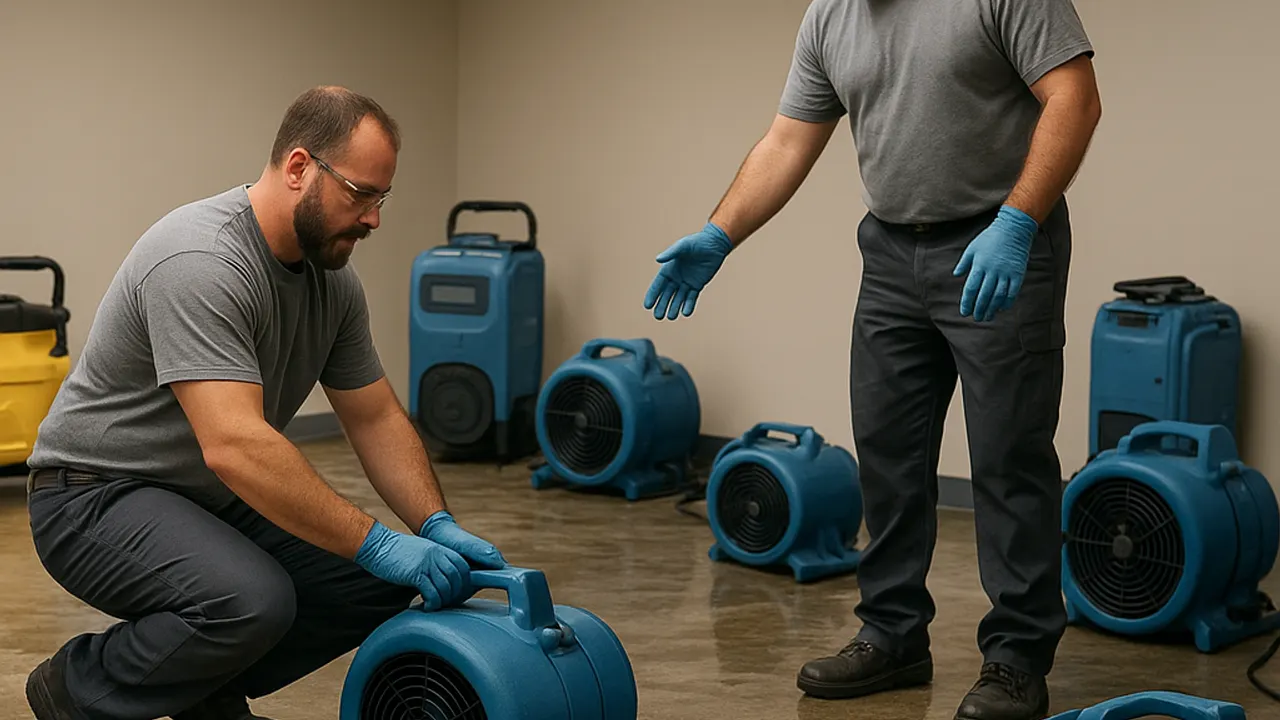
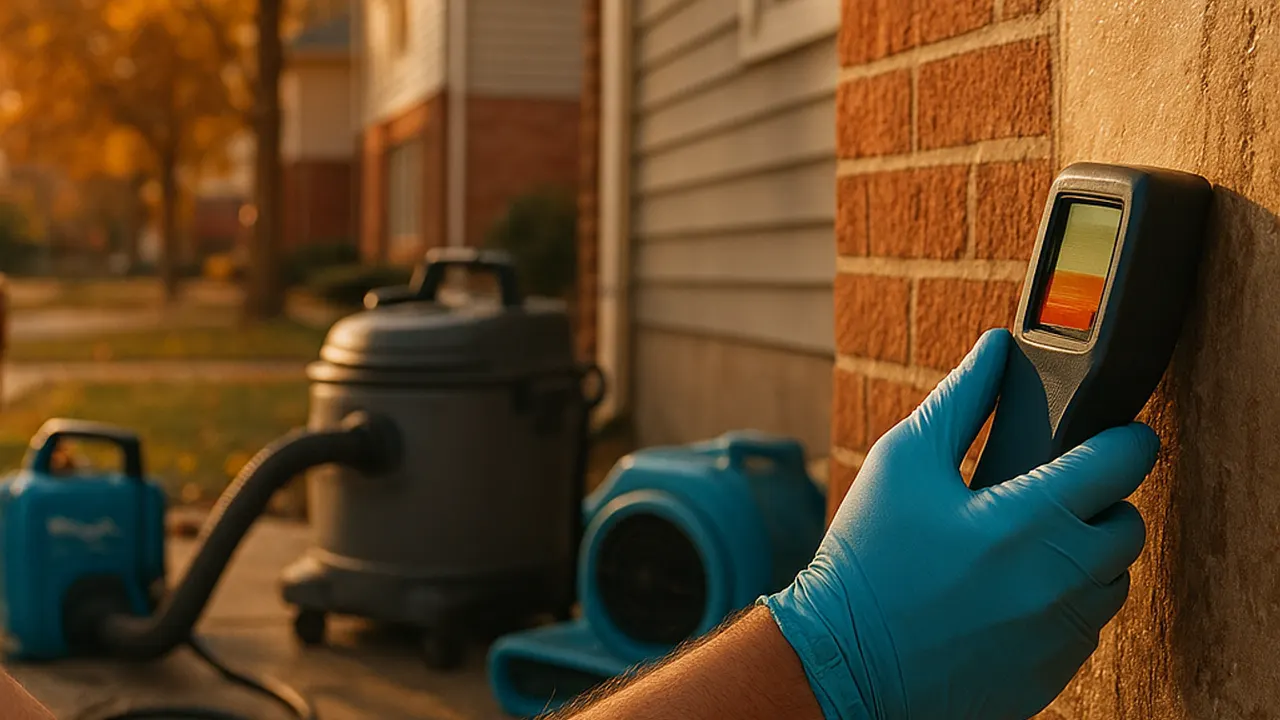
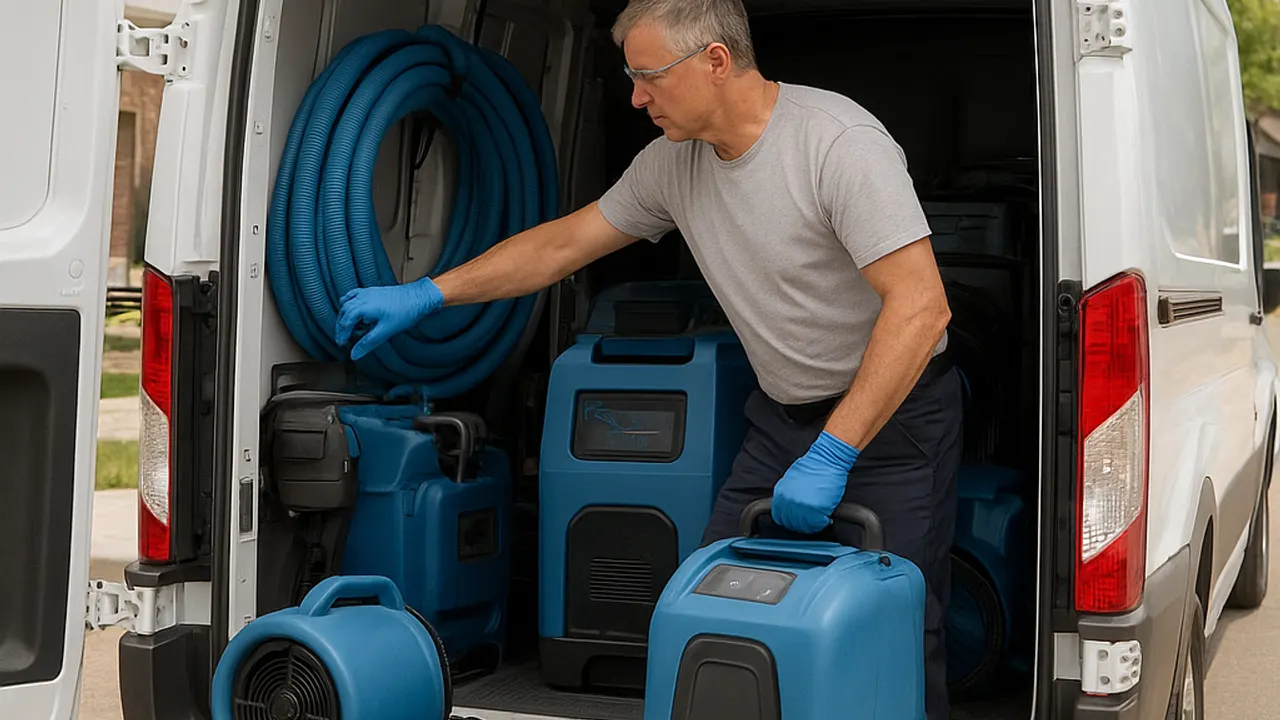
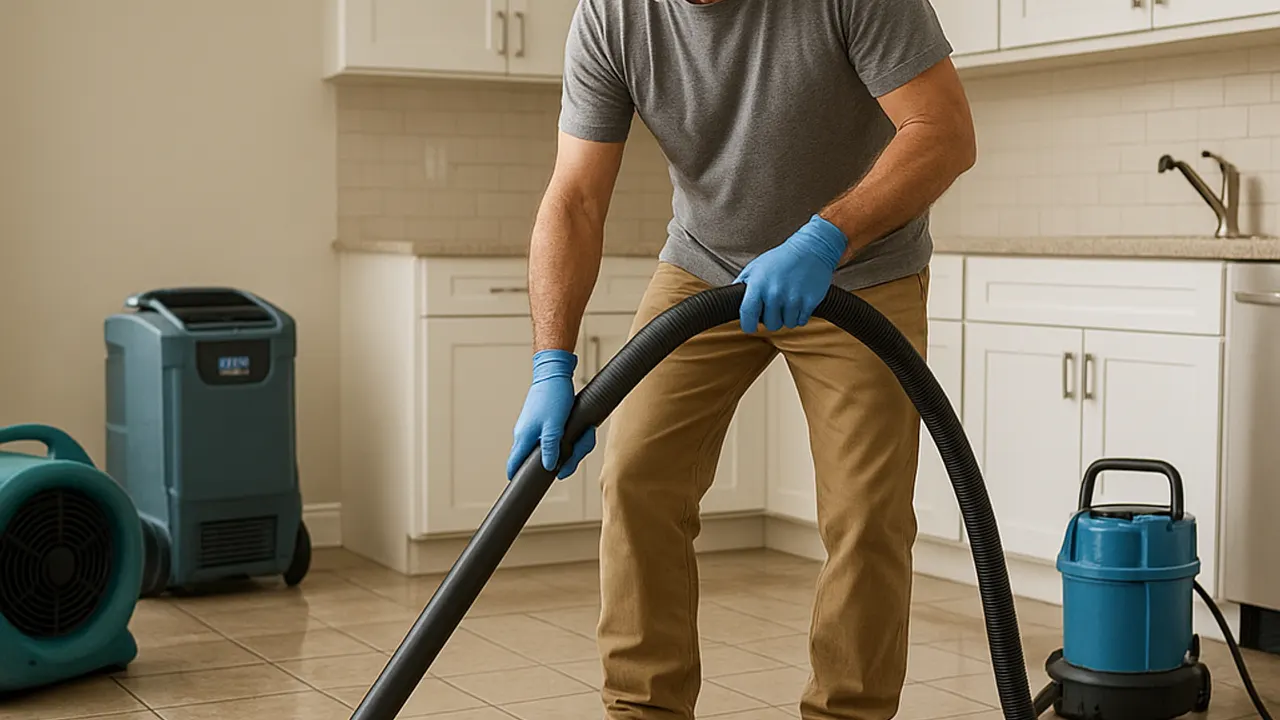
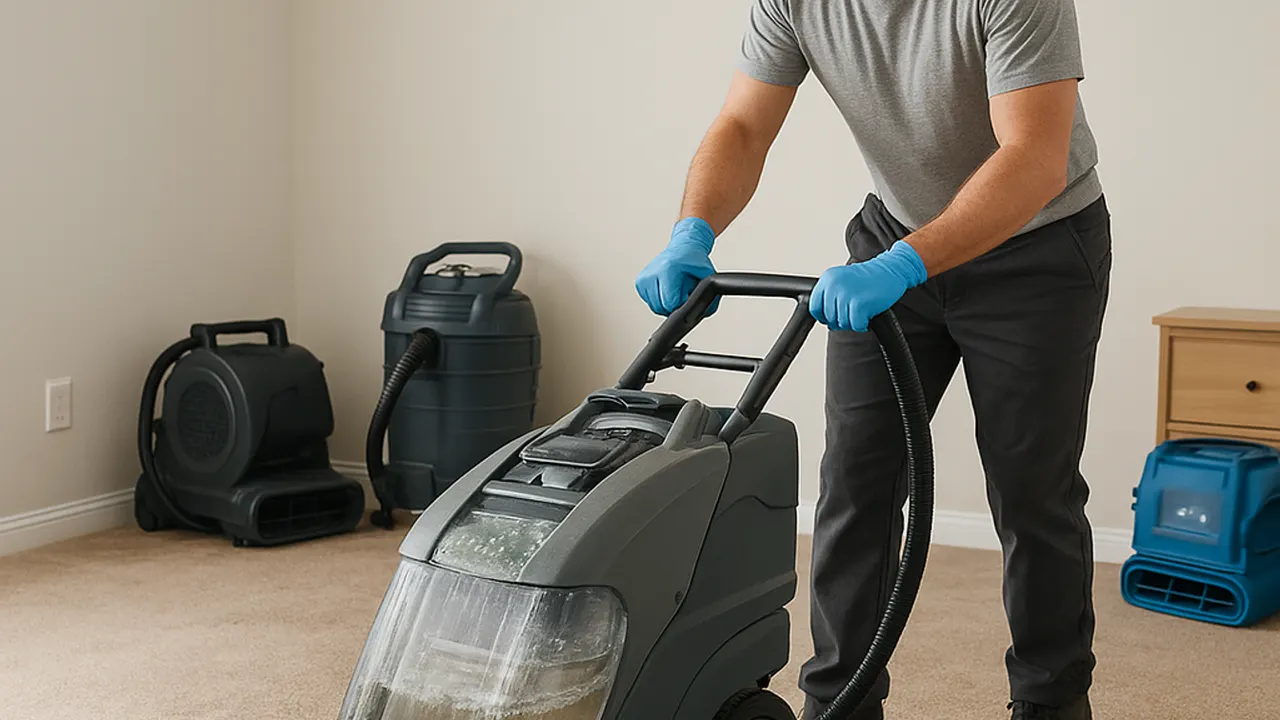
Burst pipe water cleanup Indianapolis IN helps homeowners, tenants, and property managers limit damage after a supply line splits, a fitting fails, or a pipe freezes. We extract standing water, check affected building materials, and set drying equipment where moisture remains. If water is moving across floors or soaking walls, call Water Pump Masters before the damage spreads into additional rooms.
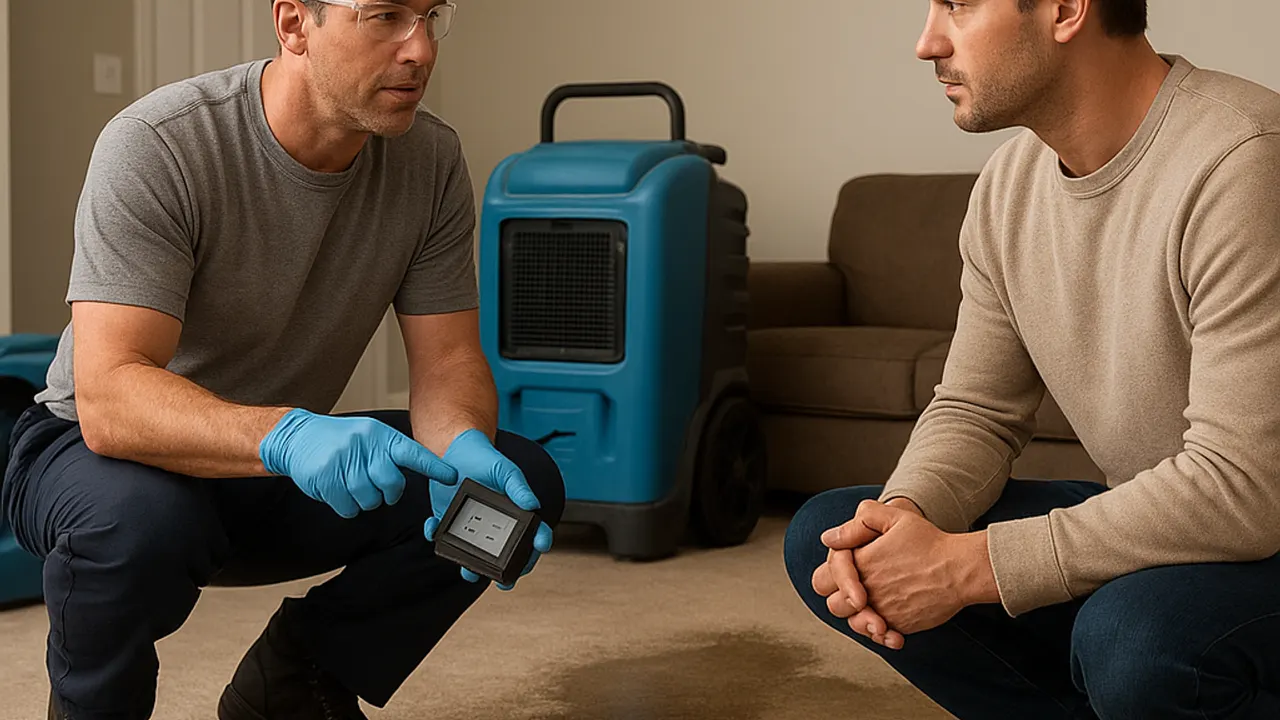
Measured readingsWe record moisture at affected materials.
Protected pathwaysWe keep equipment routes clear.
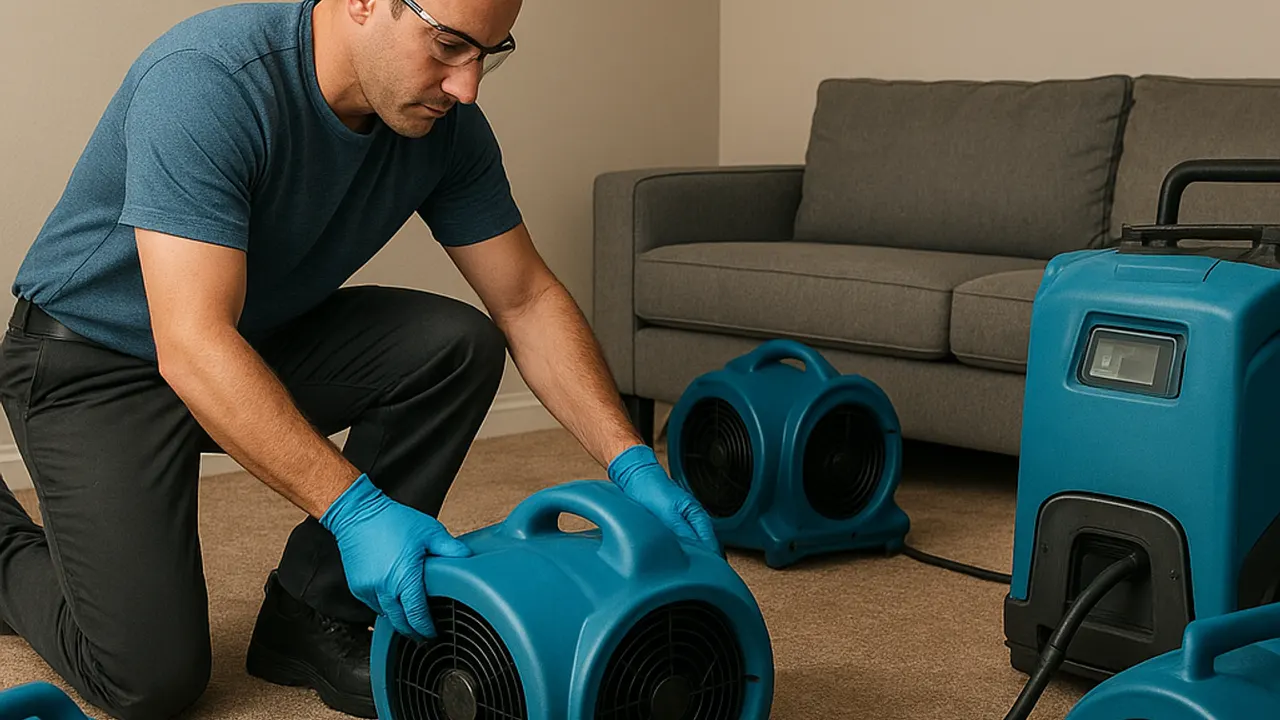
Explained setupWe show where drying equipment goes.
Documented progressWe note changes during follow-up checks.
What Burst Pipe Cleanup Includes
Burst pipe water cleanup Indianapolis IN covers water extraction, moisture assessment, and drying equipment for affected areas. We explain which materials can be dried in place and what requires removal. Pipe repair and reconstruction are separate trades, but we coordinate the cleanup sequence around the repaired source. Your plan depends on water depth, room access, materials, and how long the leak ran.
Initial Water Assessment
We identify the rooms and materials affected, check for standing water, and ask whether the pipe has been shut off. You get a practical explanation of immediate priorities, including any safety concerns that prevent entry or equipment setup.
Bulk Water Extraction
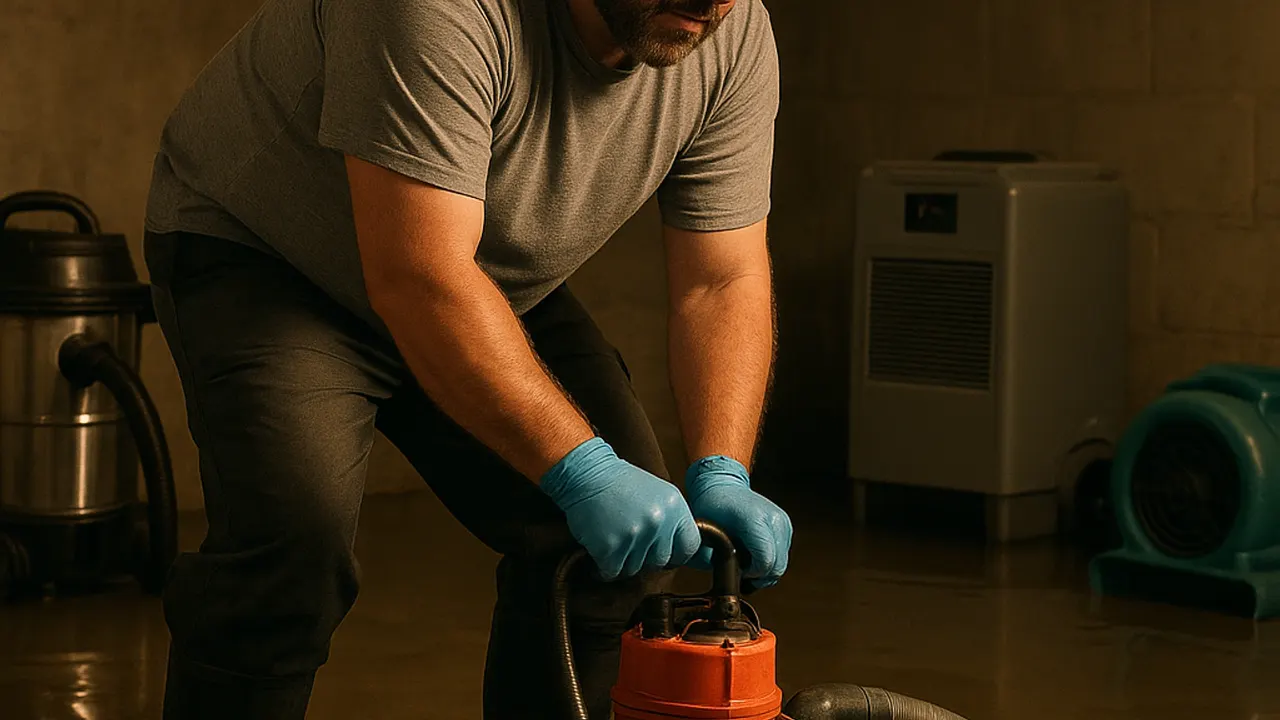
We remove pooled water with suitable pumps or extraction equipment, working from accessible surfaces and room edges. The aim is to reduce water left on floors before setting equipment for slower structural drying.
Moisture Mapping
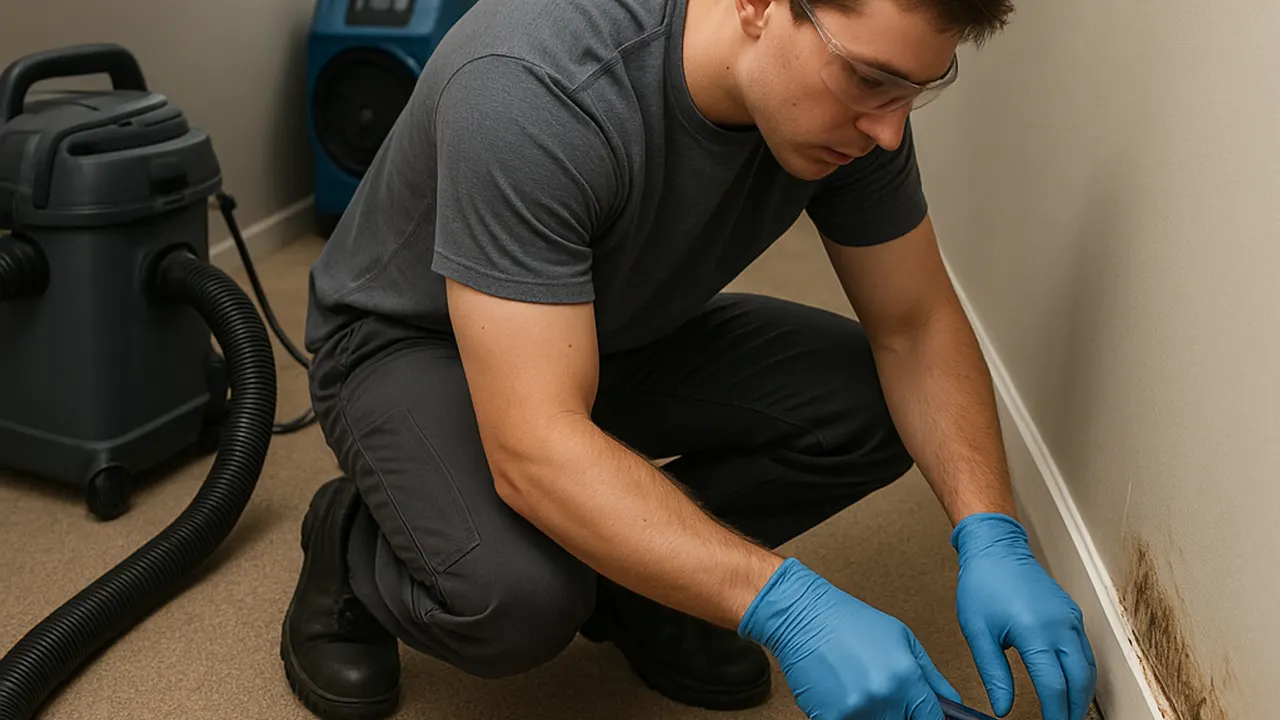
We check affected materials and compare readings with nearby areas. This helps identify wet drywall, baseboards, carpet padding, or flooring that may not look damaged from above and informs where drying equipment should go.
Drying Setup And Checks
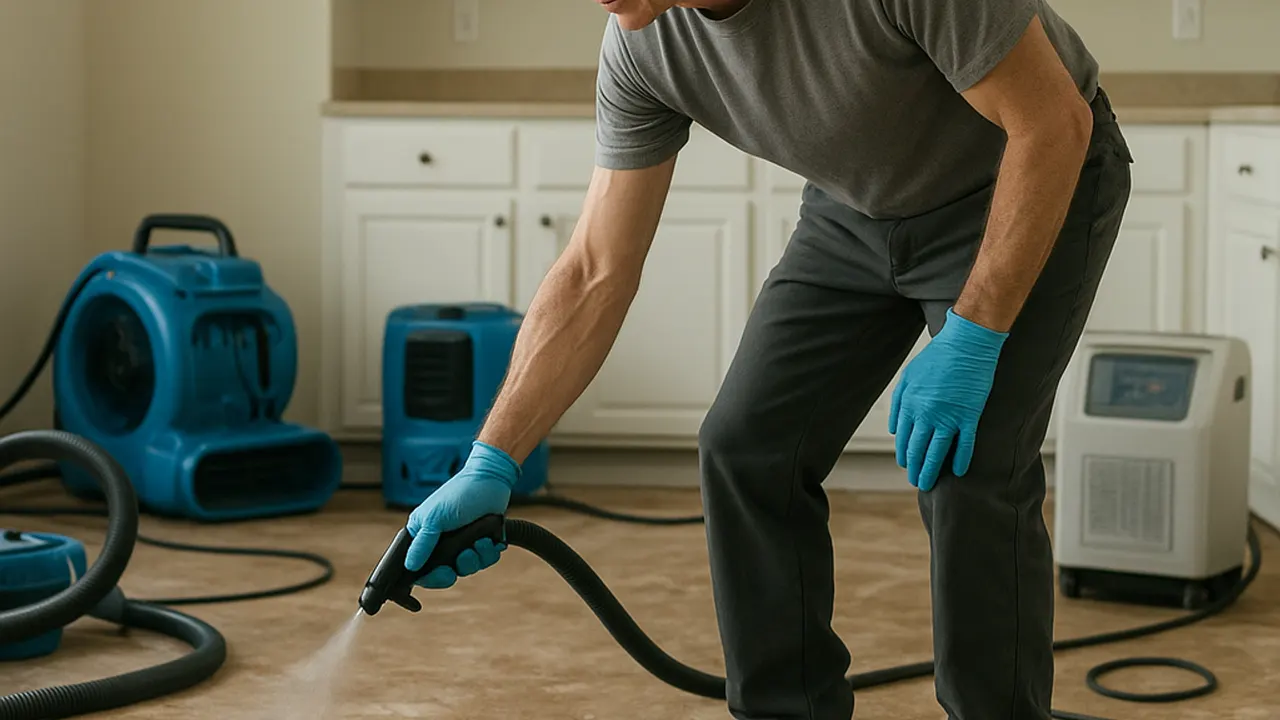
We position air movers and dehumidification equipment according to room layout and material conditions. Follow-up checks track progress and help determine whether equipment should remain, be adjusted, or be removed.
Cleanup Documentation
We record observed damage, extraction activity, and moisture-check locations. These notes give you a useful reference for conversations with your insurer, plumber, or repair contractor and clarify the condition of the affected rooms.
Homes and businesses.
The approach is the same for a home and a business. What changes is the access, the schedule and who needs the paperwork.
Homes And Rentals
We check the rooms you use and the materials water reached, from carpet padding to lower drywall. You see what we measure and where equipment will sit.
Kitchen supply line leak
Water through an upstairs ceiling
Basement pipe joint failure
Business Properties
We plan equipment access around staff, tenants, and shared corridors. You get a clear record of affected units, moisture checks, and the cleanup sequence.
Apartment unit pipe break
Office restroom line failure
Water near retail stock
Burst Pipe Water Cleanup Indianapolis IN
A plain-language look at what Burst Pipe Water Cleanup involves and when it is needed.
Burst pipe water cleanup Indianapolis IN is emergency water removal and structural drying that limits damage after a plumbing line releases water into a building. We locate the affected areas, extract standing water with a truck-mounted water extraction unit or portable extraction unit, and measure moisture in flooring, baseboards, and drywall. The work may also include removing saturated carpet padding, documenting damaged materials, and setting air movers and a commercial dehumidifier. Getting water out promptly matters because wet assemblies can continue absorbing moisture after the visible puddle is gone.
Indianapolis properties face pipe failures after hard freezes, aging connections, water heater leaks, and sudden breaks behind cabinets or in ceilings. In Marion County, a second-floor leak can run through several rooms before it becomes visible downstairs, while basement flooding can spread around stored belongings and utilities. Our Indianapolis burst pipe cleanup service starts by stopping the water source with your plumber, then focuses on extraction and drying. If you are deciding what to do before burst pipe cleanup help arrives, shut off the nearest safe valve and keep people away from electrical hazards.
Removing visible water is only the first step; damp materials need measured checks.
What It Is
Extraction and drying work that addresses water released by a broken plumbing line.
When Needed
After a pipe failure leaves standing water or moisture in floors, walls, or contents.
What To Expect
Water removal, material checks, equipment setup, and follow-up readings.
How Cleanup Moves Forward
Burst pipe water cleanup Indianapolis IN follows a practical sequence: control the source, remove water, inspect wet materials, and dry what can be restored. We explain each step as we work, protect nearby belongings, and use measured conditions to guide equipment placement. The exact schedule depends on how far water traveled and which materials absorbed it.
Stop The Flow
We begin by asking where the pipe failed and whether the water supply has been shut off. If water is still flowing, we help identify the nearest safe shutoff point; a plumber handles pipe repair. On arrival, we check access, standing water, and electrical concerns before bringing equipment inside. This first assessment usually takes about 15 to 30 minutes.
Shutoff check
Safe access
Source details
Map Wet Areas
We walk the affected rooms with you and use a moisture meter to check visible materials and likely travel paths. We note wet carpet, baseboards, ceilings, and wall sections so extraction does not stop at the room where the leak appeared.
Moisture map
Room review
Material check
Extract Standing Water
We select equipment according to water depth, access, and floor type. A truck-mounted water extraction unit handles accessible areas; a portable extraction unit reaches upper floors and tighter spaces. For deeper pools, a submersible pump moves bulk water first. Extraction commonly takes one to several hours, with the actual time tied to the affected area and volume.
Bulk removal
Surface extraction
Water record
Set Drying Equipment
After extraction, we place air movers to direct airflow across wet surfaces and use a commercial dehumidifier to pull moisture from the room. Saturated carpet padding or swollen materials are assessed separately because some cannot be dried in place. We explain equipment noise, access needs, and the checks we will make during the drying period.
Air movers
Dehumidification
Setup explanation
Recheck And Document
We return to measure the same material locations and compare readings with the initial inspection. Drying can take 2 to 5 days, depending on moisture depth, temperature, airflow, and construction. We document progress and explain whether the area is ready for equipment removal or needs additional drying, material removal, or repair coordination.
Repeat readings
Progress notes
Next steps
Tools And Drying Methods
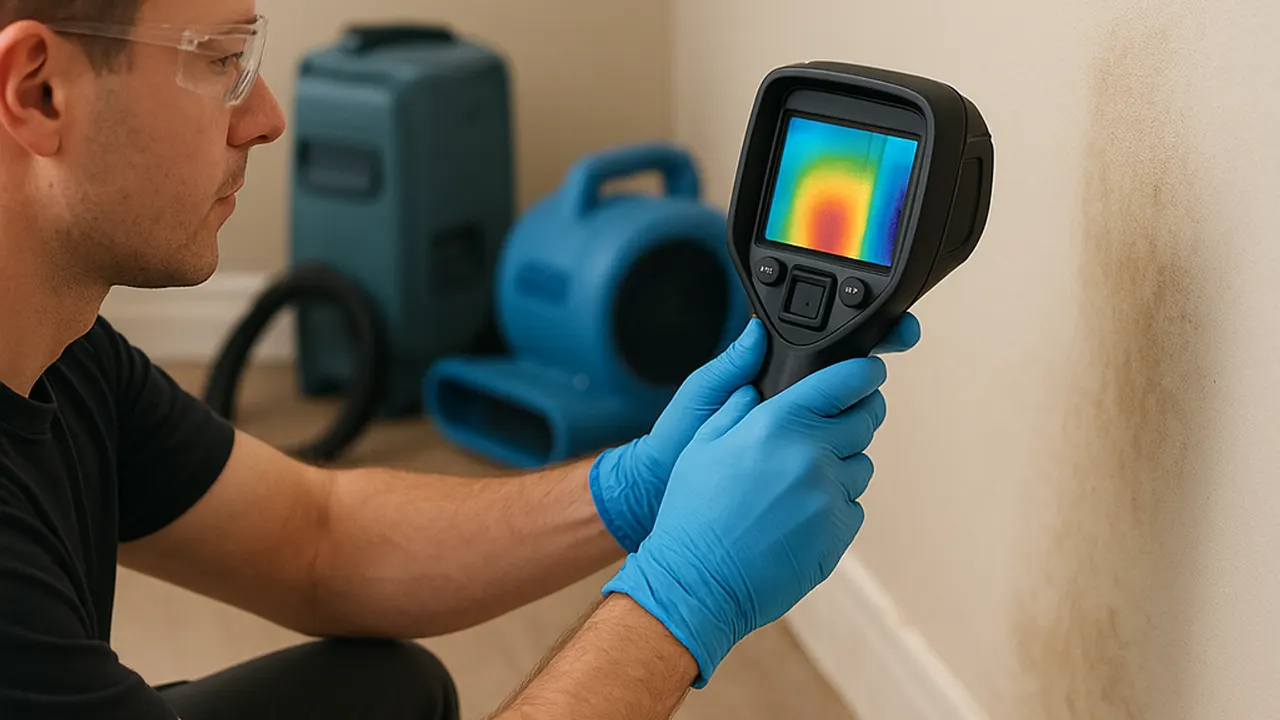
Move across a circle, or focus it and press Enter, for an illustrative thermal view of the photograph.
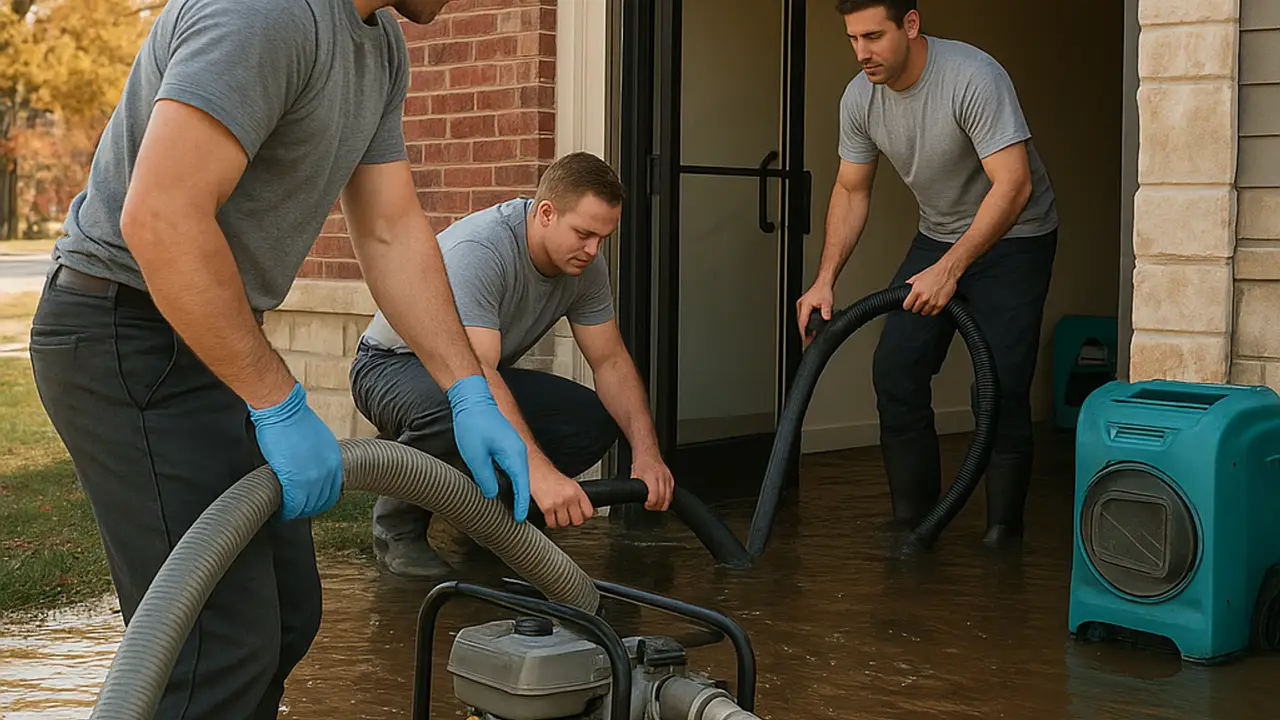
Truck-mounted water extraction unit
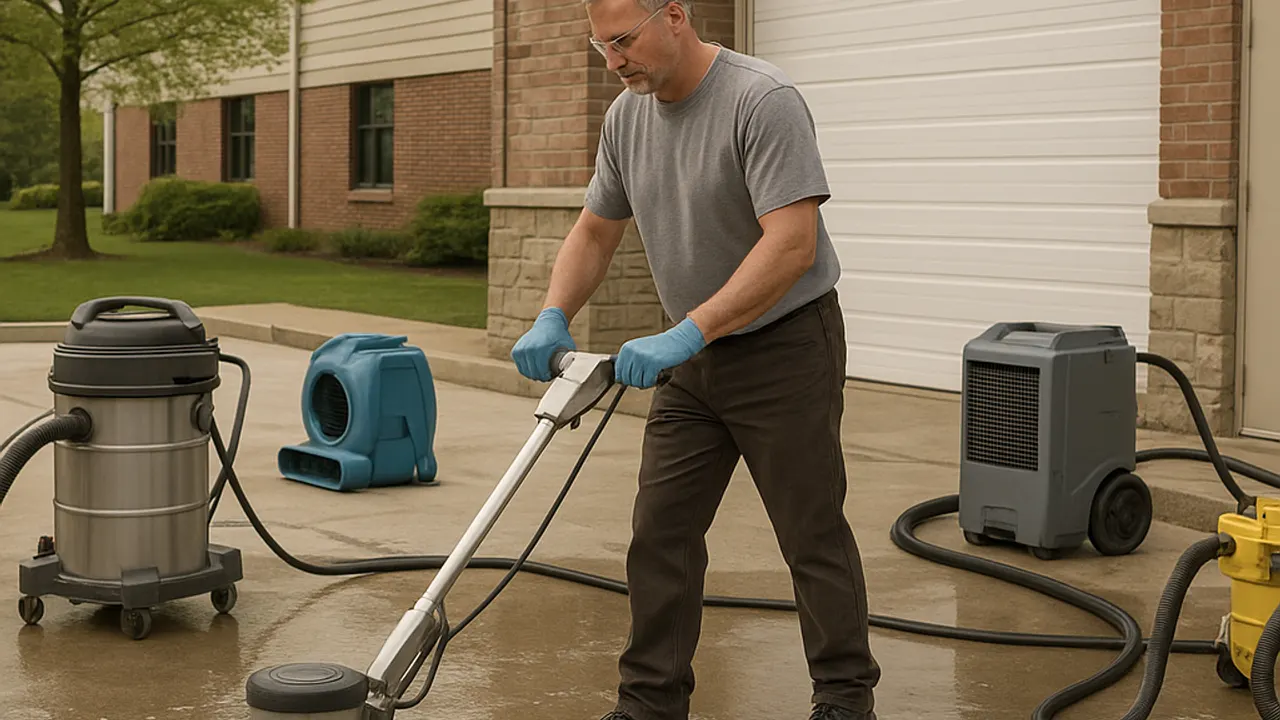
We use it to remove substantial water from accessible ground-floor areas and carpet, reducing the volume left for drying equipment.
Portable extraction unit
A portable unit reaches upper floors, apartments, and spaces where a truck-mounted hose or large equipment cannot be positioned easily.
Submersible pump
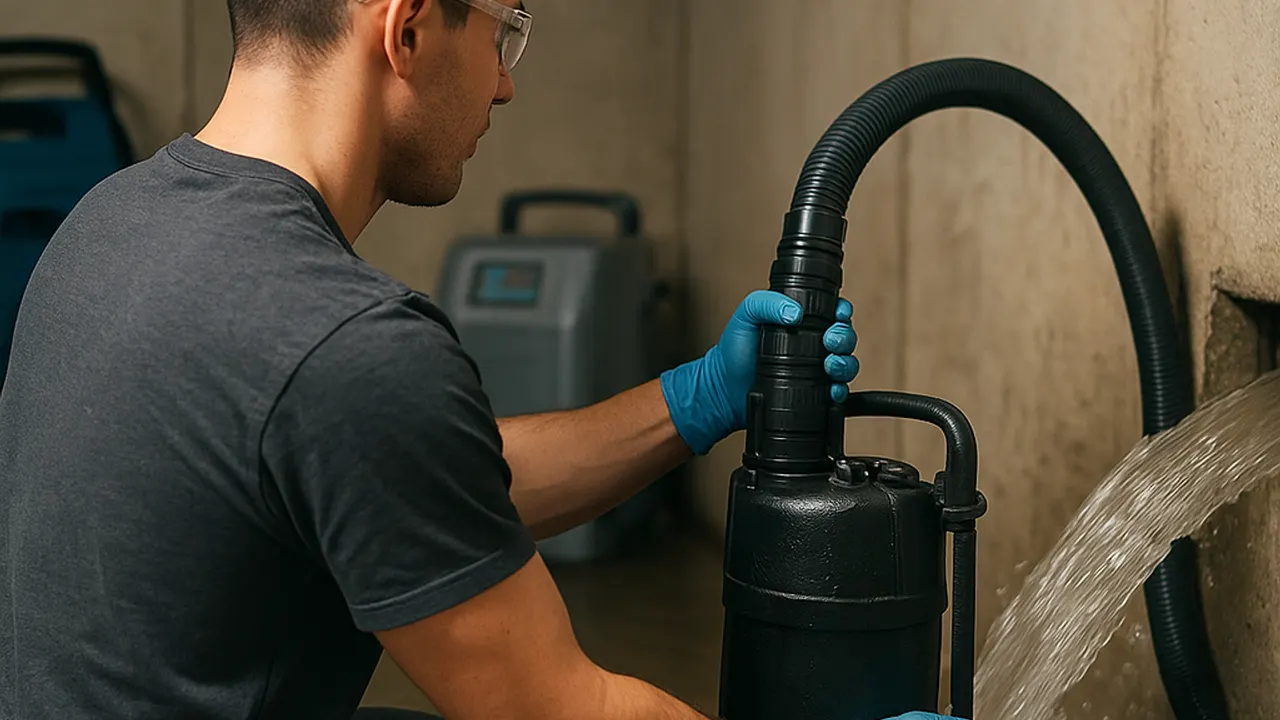
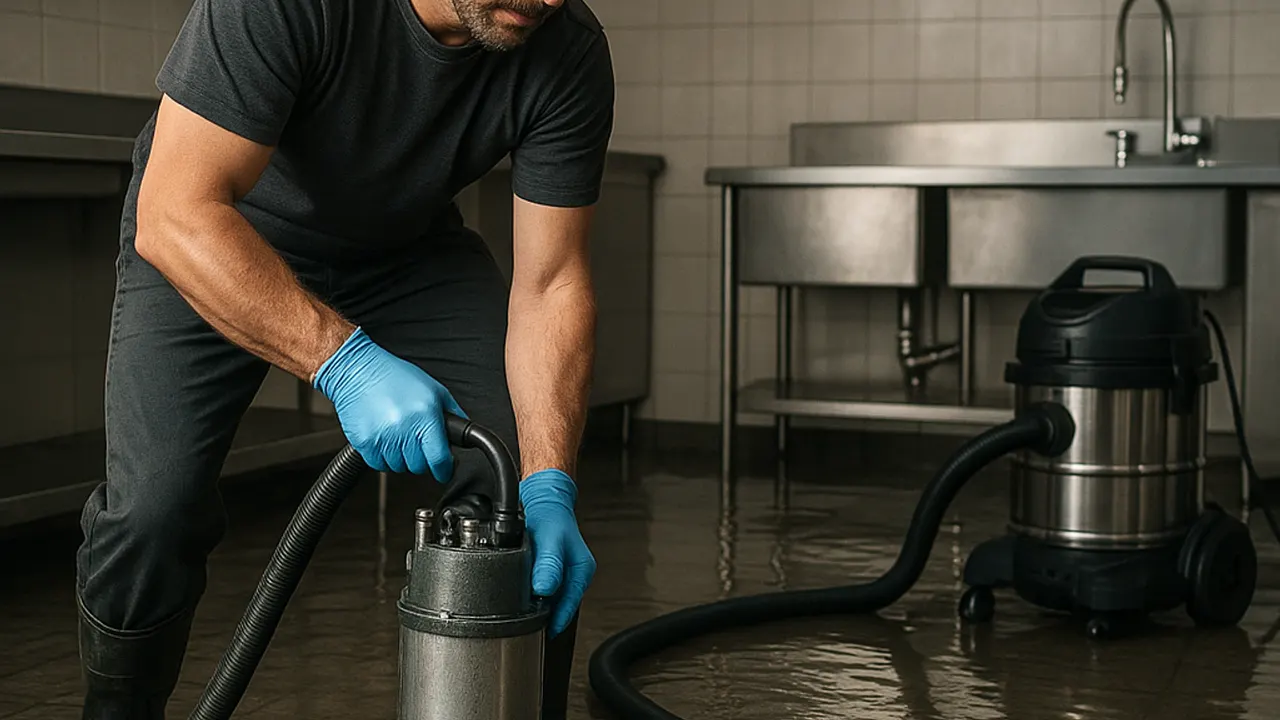
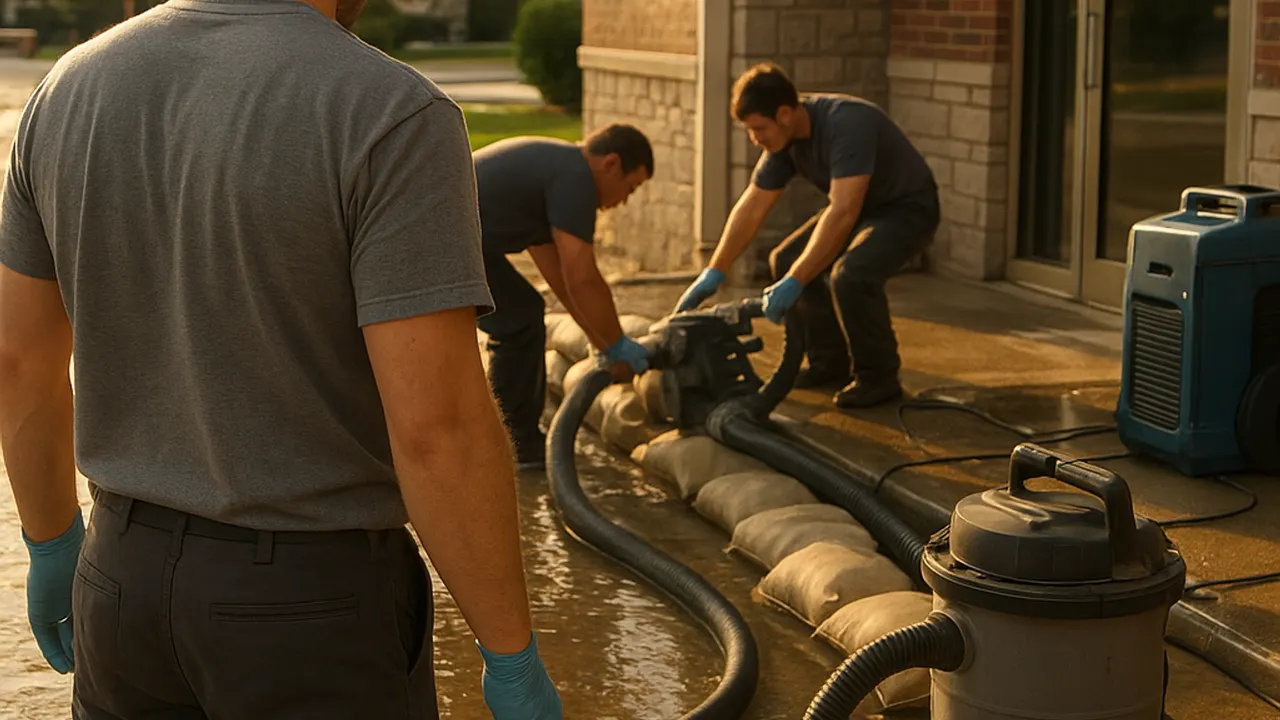
We use a pump to move deeper standing water from basements and low points before detailed extraction and material inspection.
Moisture meter
This tool checks moisture in building materials and helps us compare affected locations with nearby areas that were not exposed.
Air mover and commercial dehumidifier
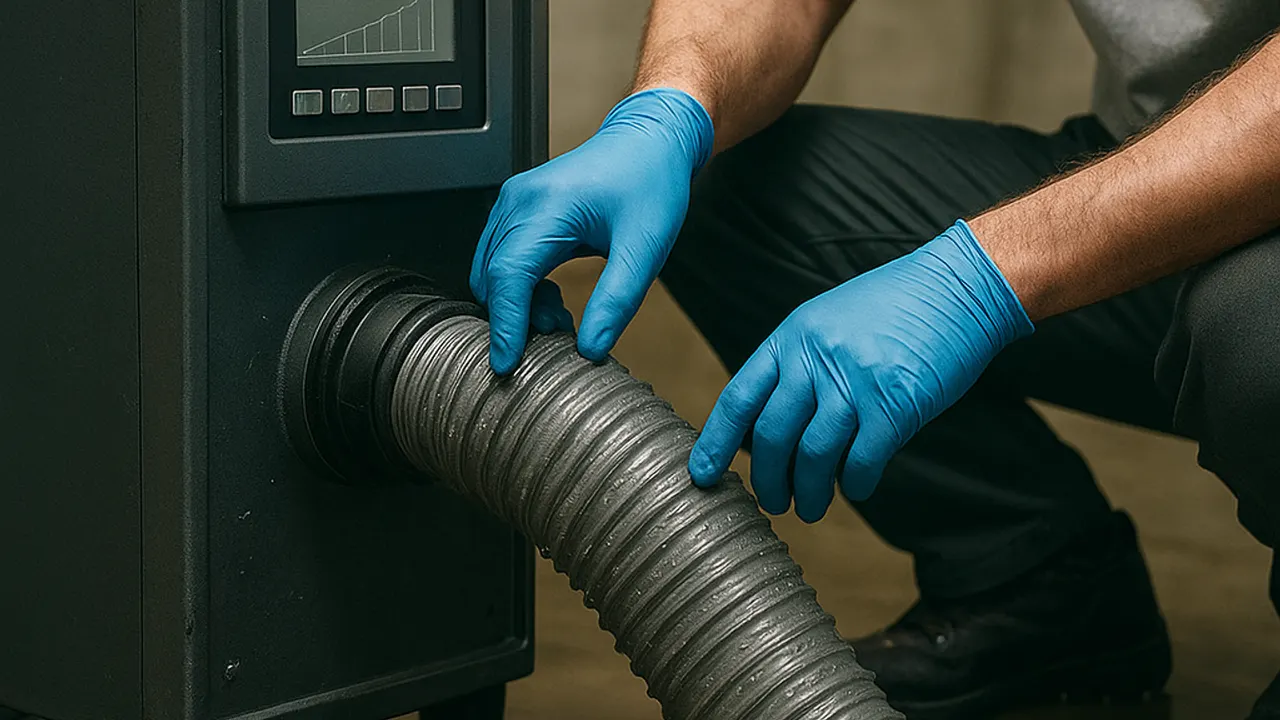
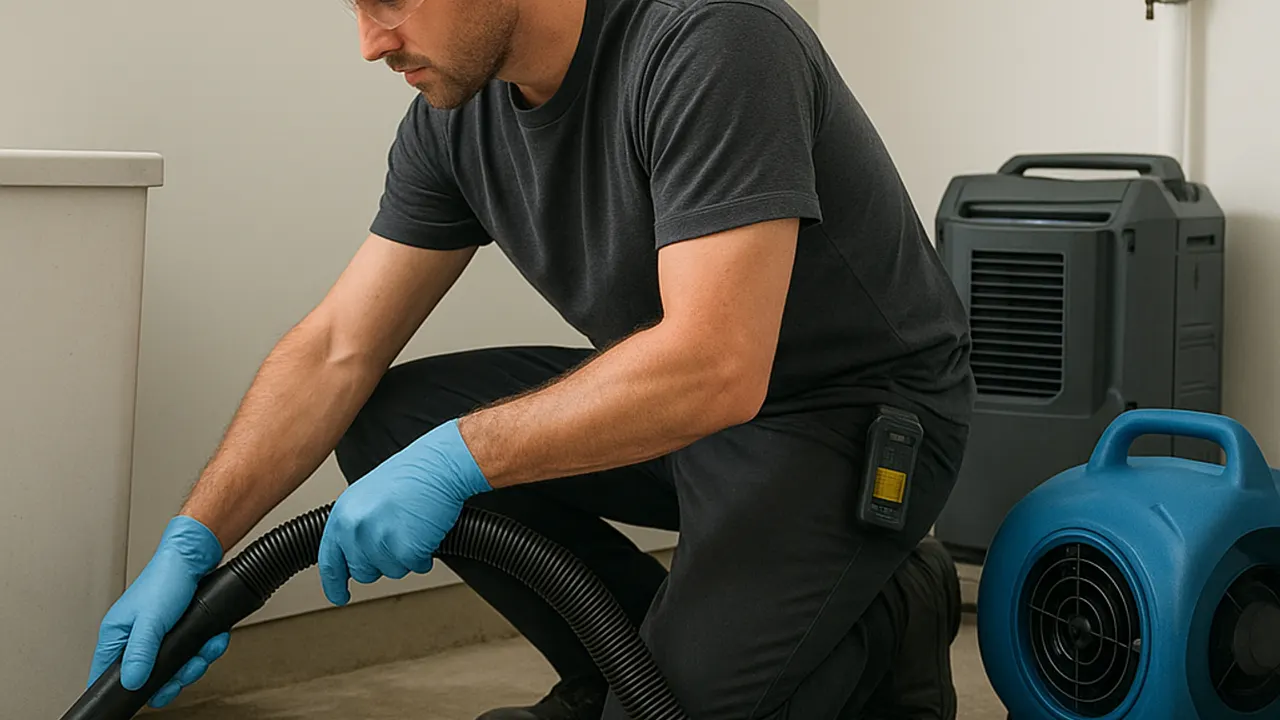
Air movers circulate air over wet surfaces while a commercial dehumidifier collects moisture from the room during structural drying.
Thermal views are illustrative, generated from the photographs.
Methods
Thermal imaging camera
We use temperature patterns to guide closer inspection; suspected moisture locations are verified with appropriate moisture checks.
ANSI/IICRC S500-informed assessment
We use the ANSI/IICRC S500 Standard for Professional Water Damage Restoration as a reference for evaluating water conditions, affected materials, and restoration steps. The assessment considers the source, time, exposure, and the building materials involved. It helps us explain why extraction, selective removal, or continued drying is appropriate for your situation.
Bulk water before structural drying
We remove standing water first because fans cannot efficiently dry a room with pools remaining on the floor. Equipment selection follows access and water depth: pumping for deeper water, then extraction for surface water. Once bulk water is removed, airflow and dehumidification address moisture retained in materials and room air.
Measured drying checks
We record moisture readings at repeatable locations and compare them with unaffected materials. Equipment placement is adjusted when readings and room conditions show a need. This approach gives you a more reliable basis for drying decisions than checking only for visible stains or a dry-feeling surface.
Selective material decisions
We assess carpet, padding, drywall, and insulation according to saturation, condition, and access. Materials that can dry in place receive targeted airflow and monitoring; damaged or unsuitable materials are discussed for removal. We keep the distinction clear between cleanup, plumbing repair, and rebuilding finished surfaces.
When Pipe Cleanup Is Needed
Frozen pipe
A frozen supply pipe breaks overnight in an Irvington home and water reaches the kitchen ceiling.
We start by confirming the water is shut off and the area is safe to enter. Our team checks the upstairs source and the ceiling below, extracts floor water, and measures the affected drywall and flooring. We set drying equipment based on the spread and return to compare readings.
Outcome: You know which rooms are affected, what can be dried, and where repair work needs to follow. Measured checks help avoid closing a ceiling while it remains damp.
Hose failure
A washing-machine hose fails in a Broad Ripple apartment while residents are away for several hours.
We remove water from the laundry area and inspect adjacent flooring, thresholds, and the unit below if water has traveled through the structure. We document visible damage, check moisture at room edges, and coordinate the drying sequence with property management and the plumber.
Outcome: The property manager gets a clearer record of affected units and a drying plan. Residents can avoid walking through wet or potentially unsafe areas.
Basement leak
A basement pipe joint opens during a winter freeze near downtown Indianapolis.
We check the basement for standing water and electrical hazards before setting up. A submersible pump removes deeper water, followed by extraction along the floor and around stored items. We inspect lower drywall and the floor perimeter, then place drying equipment where readings show moisture.
Outcome: Water is removed from accessible areas, affected materials are identified, and the next steps are documented for the homeowner and repair trades.
Heater connection
A water heater connection leaks into a Meridian-Kessler utility room before a holiday gathering.
We extract water from the utility room and check nearby flooring, baseboards, and any adjoining finished space. Once the source is stopped, we use moisture readings to determine whether materials need drying or removal. We keep the work focused on the leak path and explain the equipment setup.
Outcome: You get a defined cleanup area and a practical drying timeline, rather than relying on a towel-dry surface that hides moisture below.
Broad RippleIrvingtonDowntown Indianapolis
Indianapolis Pipe Cleanup Conditions
Burst pipe water cleanup Indianapolis IN has to account for local building layouts and the season. October brings cooler nights, and winter freezes can stress exposed lines in garages, crawl spaces, and exterior walls. Older Indianapolis homes may combine plaster, hardwood flooring, and later remodeling, so a leak can follow a route that is not obvious from the first stain.
In apartments and multi-story buildings, water can cross unit boundaries or appear one floor below the broken line. We check the source area and likely travel paths, then extract and measure rather than treating only the visible puddle. Our burst pipe water damage cleanup Indianapolis approach also considers basement flooding and sump pump failure when water collects below grade.
We serve Marion County and nearby Indianapolis neighborhoods, with access planning for homes, businesses, and managed properties.
Broad Ripple: Older homes and remodeled interiors can have mixed flooring and concealed plumbing routes; we check adjoining rooms when water appears near a kitchen or bath.
Irvington: Cold-weather pipe breaks in older houses can affect upper ceilings and lower rooms, so we inspect both the leak area and the path below.
Downtown Indianapolis: Apartments and commercial properties may require portable equipment and coordination around shared corridors, elevators, and neighboring units.
Meridian-Kessler: A pipe failure in a finished basement can reach stored contents and lower wall materials; we check the perimeter after water extraction.
Freeze-thaw swings stress plumbing near exterior walls: Cold snaps can expose weak fittings and poorly protected lines, while a thaw makes a leak visible after water has already entered a wall or floor. We check adjacent materials instead of limiting work to the first drip point.
Older homes combine original and remodeled materials: Hardwood, plaster, newer drywall, and different flooring layers respond differently to water. We identify the materials present and choose extraction and drying methods that fit the assembly rather than applying one setup throughout.
We walk the affected rooms with you and explain what needs checking.
We protect access paths and position extraction equipment for the wet area.
We review readings, document progress, and explain the next cleanup step.
From problem to finished result.
IllustrativeThe thermal view is generated from the photograph. It is not a measurement. Drag the handle, or use the arrow keys once it is focused.
Kitchen Line Failure
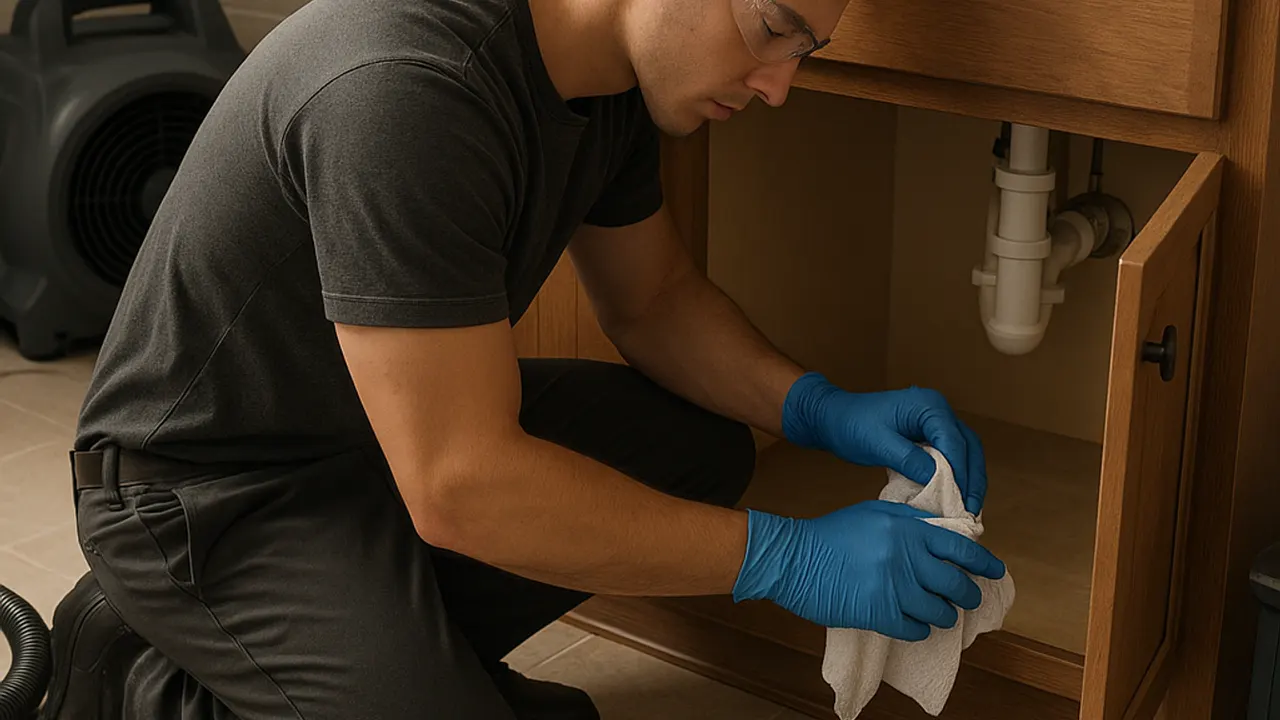
Before: A split line under the sink left standing water across the kitchen and dining threshold. Carpet padding in the adjoining room was wet, and the cabinet toe-kick concealed moisture along the wall. The homeowner had shut off the water but could not tell whether the hardwood beneath the carpet edge was affected.
After: We extracted the visible water, checked the carpet edge and cabinet base, and set air movers with dehumidification. Follow-up readings over 3 days showed the damp area shrinking; the homeowner received a record of the locations checked and materials needing repair attention.
Check braided supply hoses and shutoff valves during routine kitchen inspections. Replace visibly corroded connections through a plumber, and keep the under-sink cabinet clear enough to spot a small leak before it reaches adjacent flooring.
Upstairs Pipe Break
Before: A bathroom pipe failure sent water through the ceiling into a bedroom below. The ceiling stain covered about 6 square feet, but wet flooring extended beyond the visible drip area. Furniture had been moved, while damp drywall and baseboards remained around the room perimeter.
After: We checked both floors, extracted water from the bedroom floor, and documented the ceiling and wall readings. Drying equipment ran for 4 days with follow-up checks. The affected ceiling area was identified for repair, and the homeowner had a clearer separation between water cleanup and reconstruction.
Know the location of the main water shutoff and keep access clear. After plumbing repairs, watch the ceiling and baseboards for renewed staining or softness, and report changes before paint or drywall work hides them.
Basement Supply Leak
Before: A failed joint released water into a basement utility room, leaving roughly an inch of water around stored boxes and the base of a finished wall. The homeowner avoided the area because electrical equipment was nearby and could not judge how far water had spread.
After: After the area was safe to enter, we pumped out the standing water and extracted along the floor edges. Moisture checks identified a wet lower wall section and affected boxes. Drying equipment was set for 3 days, with the wall condition recorded for the repair decision.
Keep stored items on shelving rather than directly on a basement floor, and check visible pipe joints seasonally. Test sump equipment according to its manufacturer instructions and keep the route to the electrical panel unobstructed.
Problems Fixed Before They Spread
Water from a failed pipe moves through seams, under flooring, and into wall cavities faster than a surface inspection reveals. We focus on practical steps for flooded room cleanup after pipe failure Indianapolis: remove standing water, locate damp materials, and dry or remove them based on their condition. Quick action helps limit secondary mold growth and avoid preventable damage to adjacent rooms.
Wet carpet paddingWater runs beneath carpet and saturates padding unseenWet padding holds water against the floor and can keep the room damp after the carpet surface feels dry, increasing odor and material damage. We extract water from the carpet, check the padding and floor beneath, and determine whether the assembly can be dried in place. If padding is saturated or damaged, we explain removal before drying continues. We then place airflow and dehumidification equipment where readings show moisture, and recheck the same locations.
Ceiling leak spreadA ceiling leak spreads into a room belowWater can stain ceilings, soften drywall, and travel along framing before a visible drip marks the full affected area. We inspect the room below and the source area above, looking for moisture paths beyond the stain. We extract floor water, document affected ceiling and wall sections, and explain where controlled access or material removal is needed. After the plumbing leak is stopped, drying equipment targets the wet structure rather than only the visible drip point.
Hidden wall moistureHidden moisture remains behind baseboards and wallsConcealed dampness can prolong drying, damage finishes, and create conditions for secondary mold growth if the assembly stays wet. We use moisture readings and visual inspection to identify areas that need closer assessment. Where readings indicate wet drywall or insulation, we explain the options for access, drying, or removal. We protect adjacent surfaces and document findings so the next repair step is based on observed conditions, not guesswork.
Basement standing waterBasement water reaches stored belongings and utilitiesStanding water can damage boxes, furniture, and lower wall materials, while water near electrical equipment creates a serious access hazard. We assess safe access first, then use a pump or extraction unit to clear water from the basement. We identify items and building materials affected and keep people away from electrical hazards until cleared. After extraction, we check the floor perimeter and lower walls and set drying equipment according to moisture readings.
What Prompt Cleanup Protects
Remove water, identify damp materials, and make the drying steps clear.
Less Water Left Behind
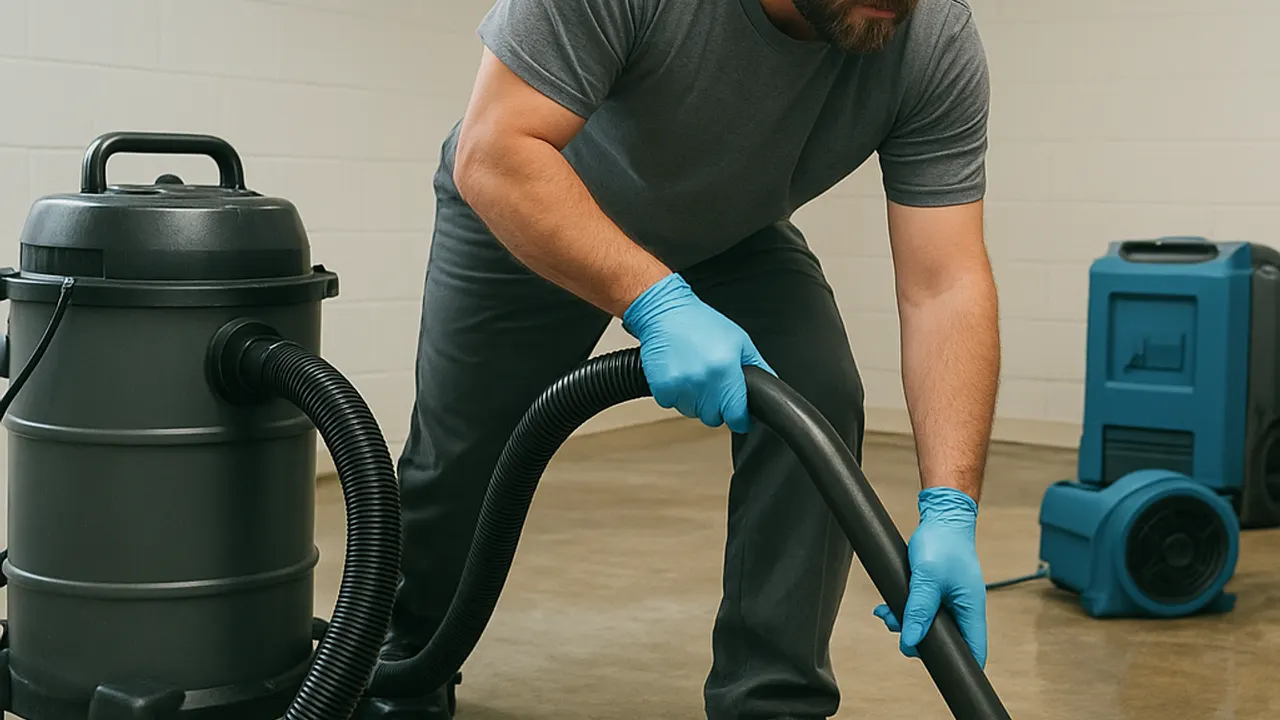
A submersible pump handles deeper standing water, while a wet/dry vacuum and extraction tools reach shallow pools and edges. Removing bulk water first reduces the load on drying equipment. For water extraction from a burst pipe Indianapolis homes, we check adjoining rooms and closets too, where water often travels under thresholds before appearing as a stain.
Measured Structural Drying
We use a moisture meter to compare affected drywall and flooring with unaffected areas, then position air movers to circulate air across damp surfaces. A commercial dehumidifier collects moisture from the room air. Readings guide adjustments; equipment is not removed just because a carpet feels dry on top.
Clear Damage Documentation
You can see which areas were wet, what materials were extracted or removed, and how moisture readings changed during the job. Photographs and notes help you discuss the loss with your insurer or plumber. We separate confirmed observations from work that requires a plumbing repair or reconstruction contractor.
A Safer Work Area
We isolate wet work zones when practical, protect unaffected contents, and use polyethylene sheeting where it helps control dust or contain an opening. If water has contacted electrical equipment, keep clear and have the hazard addressed before entering. Cleanup after a broken pipe Indianapolis IN should start with safe access, not hurried equipment placement.
What you receive
Clear records you can keep and share.
Photo Log
Images of visible affected areas and work progress.
Moisture Notes
Recorded locations and readings from follow-up checks.
Equipment Record
Notes describing equipment placement during drying.
Work Summary
A concise record of extraction and cleanup steps.
Extraction And Drying Differ
Extraction removes liquid water; structural drying addresses moisture retained in building materials and room air.
Surface Water
Visible water that can be pumped or extracted from accessible surfaces.
Pooled floor water
Wet carpet surface
Basement low points
Absorbed Moisture
Water held in materials after the visible puddle is gone.
Damp drywall
Saturated padding
Wet baseboards
Drying Progress
Changes tracked by checking the same material locations over time.
Repeat readings
Equipment adjustment
Documented changes
Materials We Check
Carpet
Padding
Drywall
Baseboards
Hardwood
Laminate
Insulation
Wall cavities
Service ZIP codes.
A list like this tells people straight away whether you cover their street. Not listed? Call and ask: it only takes a minute.
Water Pump Masters provides burst pipe water cleanup in Indianapolis, including water extraction, moisture checks, and structural drying setup. Call 317-792-8700 and tell us where the pipe failed, whether the water is shut off, and which rooms are affected. We will explain the immediate cleanup steps and what information helps us prepare. A plumber must repair the broken line; our work removes water and addresses moisture left in building materials.
Shut off the nearest safe water valve and call a plumber and cleanup team immediately. If water is near outlets, appliances, or a breaker panel, stay out and contact the appropriate emergency professional rather than stepping into it. Move small valuables only if the route is dry and safe. For what to do before burst pipe cleanup help arrives, take photos from a safe location and avoid running fans across contaminated water.
The affected square footage, water depth, access, carpet padding, and wall-cavity moisture drive the price. We explain upfront pricing before work proceeds. Plumbing repair, reconstruction, and replacement finishes are separate from water extraction and drying.
Yes, cleanup can include drying walls and floors when moisture readings show those materials are wet and suitable for drying in place. We check drywall, baseboards, and flooring, then use air movers and a commercial dehumidifier as needed. Drying often takes 2 to 5 days, with progress measured during follow-up visits. Severely swollen or saturated materials may require removal rather than continued drying.
Burst pipe water cleanup Indianapolis IN starts with a clear account of where the water went and whether the source is shut off. Call Water Pump Masters at 317-792-8700; our team will explain the next cleanup steps and upfront pricing.
Call 317-792-8700 to describe a leak, flooded basement, or water-soaked floor and get connected with an independent service company. Share your Indianapolis neighborhood, the water source, and whether the water is still spreading. Hours vary by company, so call to discuss urgent needs and the next practical step.