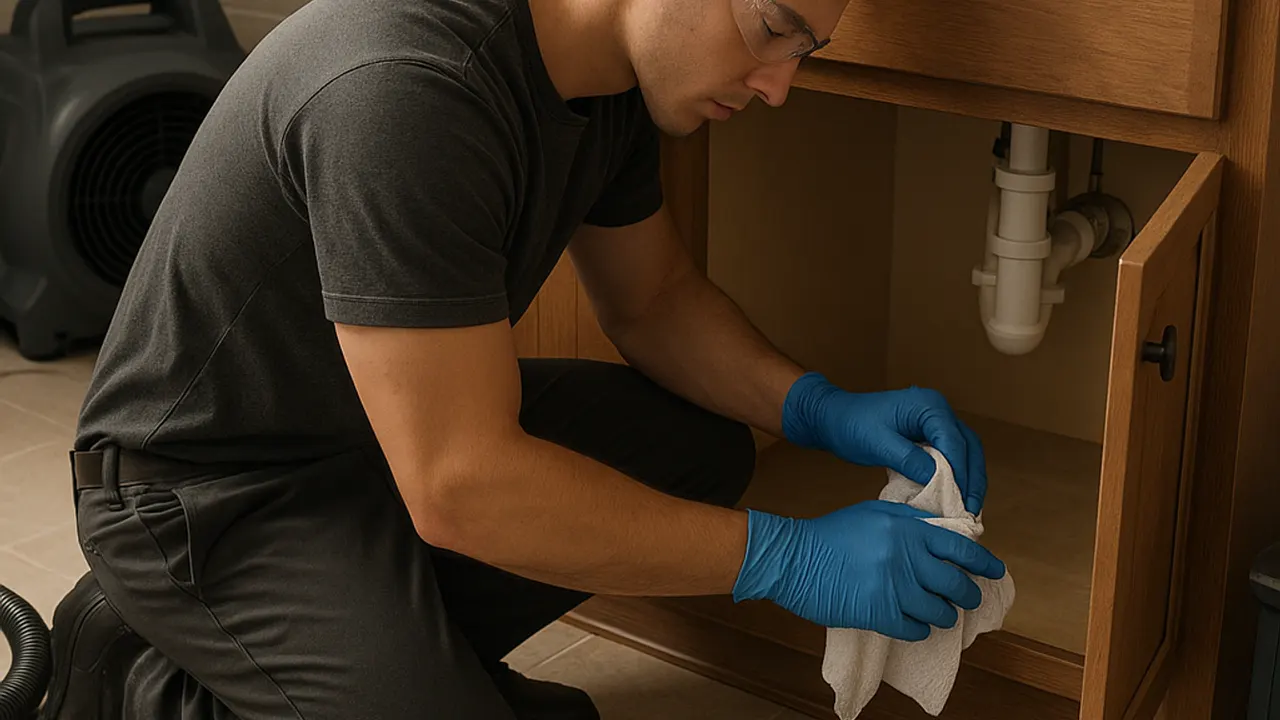
Water damage cleanup Indianapolis IN for soaked homes
Water damage cleanup Indianapolis IN helps homeowners and property managers limit damage after leaks, flooding, or a failed sump pump. Water Pump Masters extracts standing water, checks affected materials, and sets up drying where needed. If your basement, flooring, or walls are wet, prompt water damage cleaning Indianapolis gives you a clearer path from the first inspection through cleanup and drying.
Initial condition checkStanding water extractionSurface cleaning
Written service plansClear plan before work
Careful property protectionFloors, contents and finishes protected
One point of contactOne local contact
Prepared local crewsIndianapolis
What water damage cleanup includes
Water damage cleanup covers assessment, water extraction, cleaning of appropriate surfaces, and drying checks for affected areas. We identify the water source and inspect materials before deciding what to retain or remove. Work such as plumbing repair, major reconstruction, and replacement finishes is separate from cleanup unless arranged as part of a broader project. Your needs depend on water depth, exposure time, and material condition.
Initial condition check
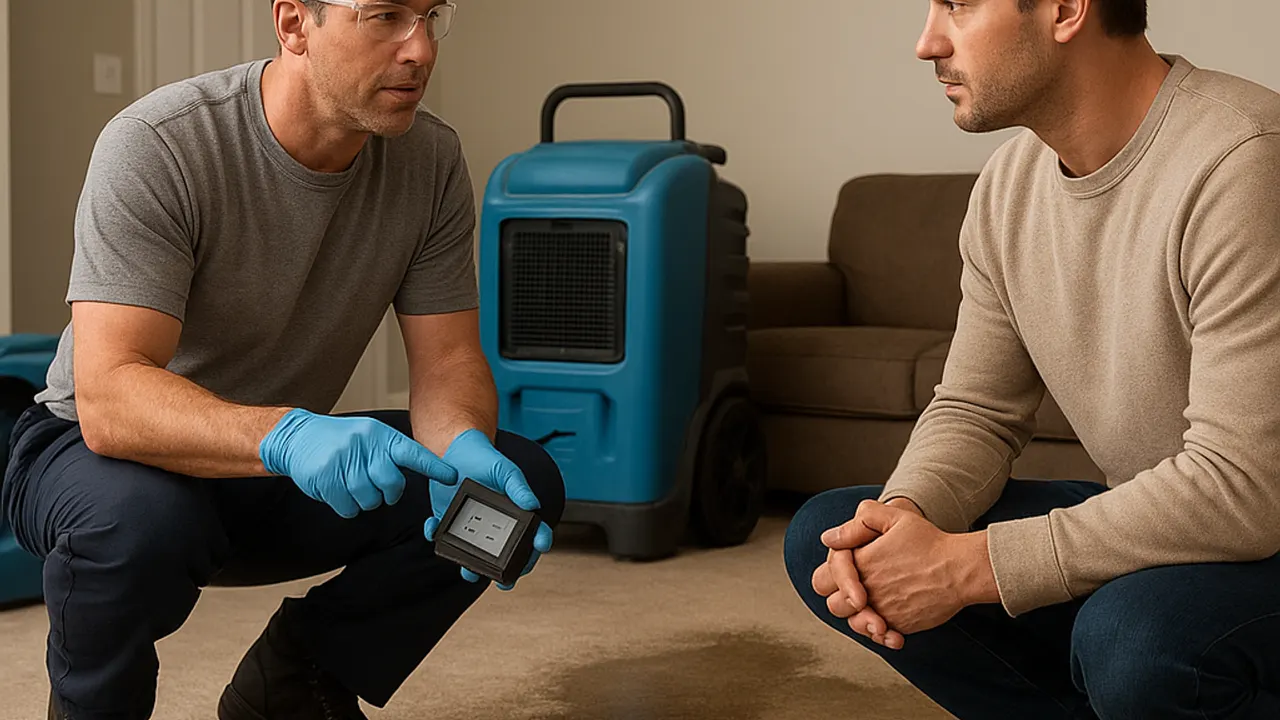
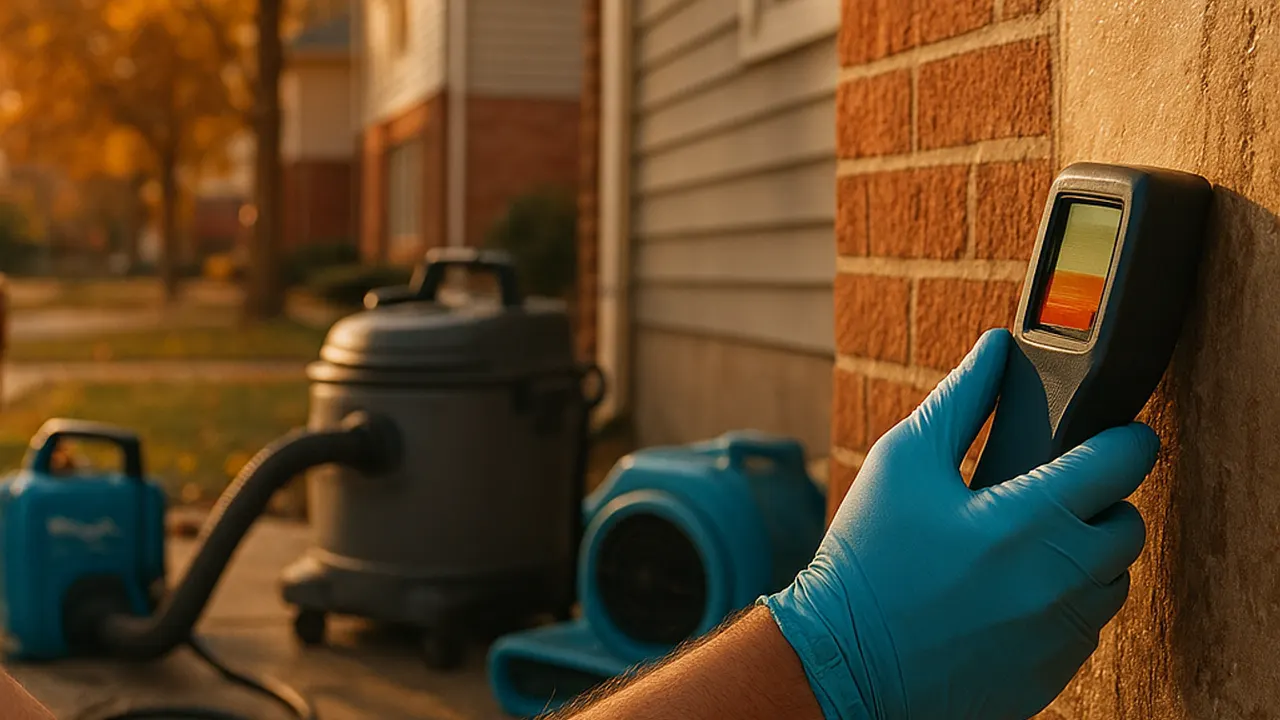
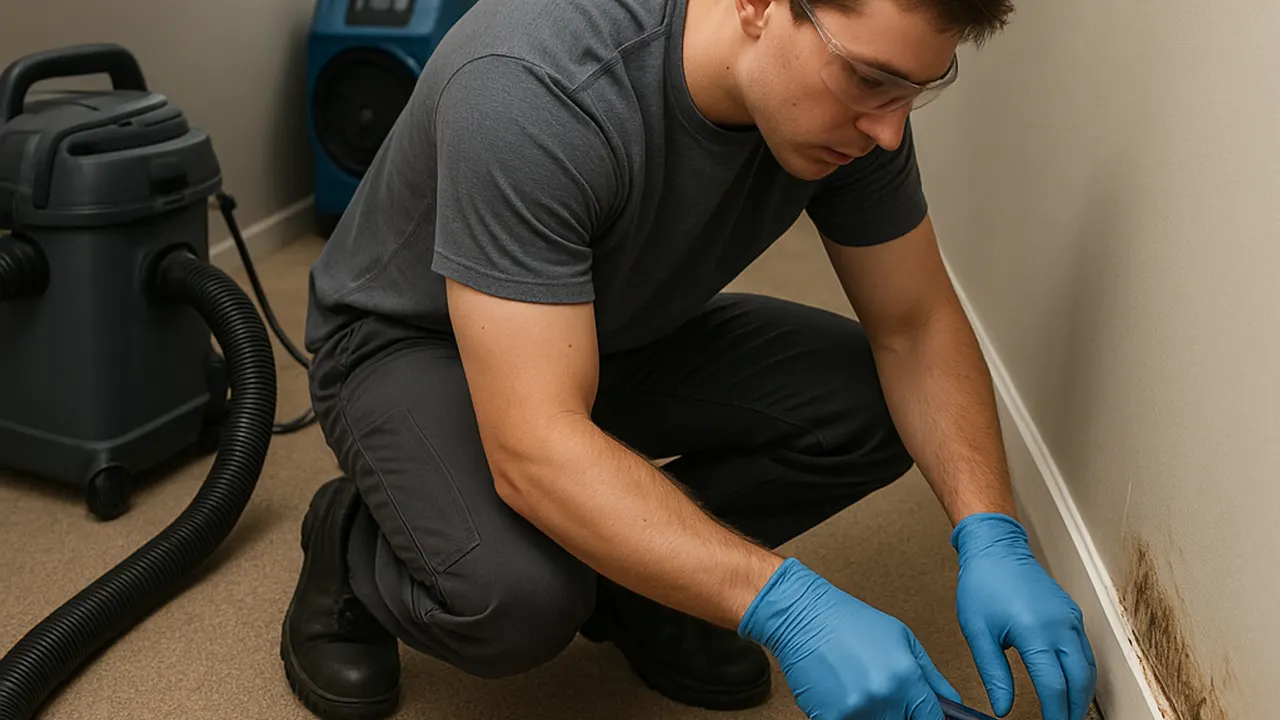
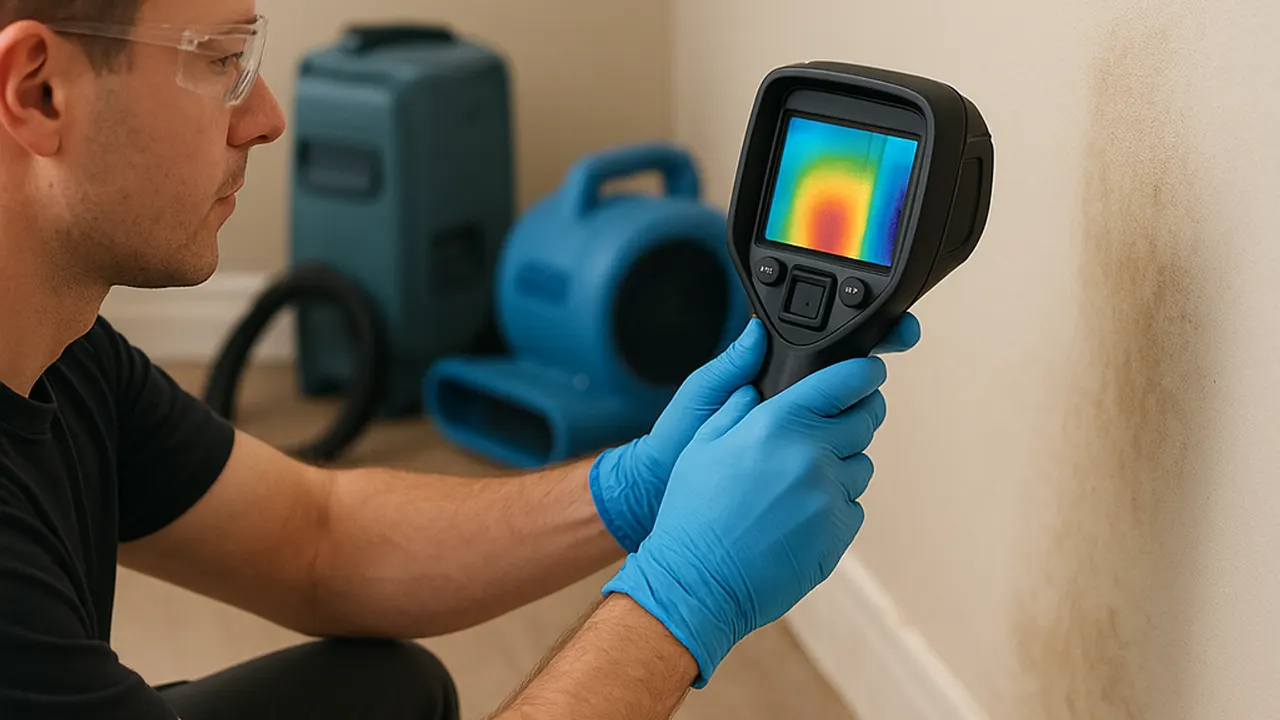
We walk through affected rooms, document visible water, and ask about the source and timing. A moisture meter can help identify damp material beyond the obvious wet area. You hear what we find and which rooms or surfaces need attention before cleanup advances.
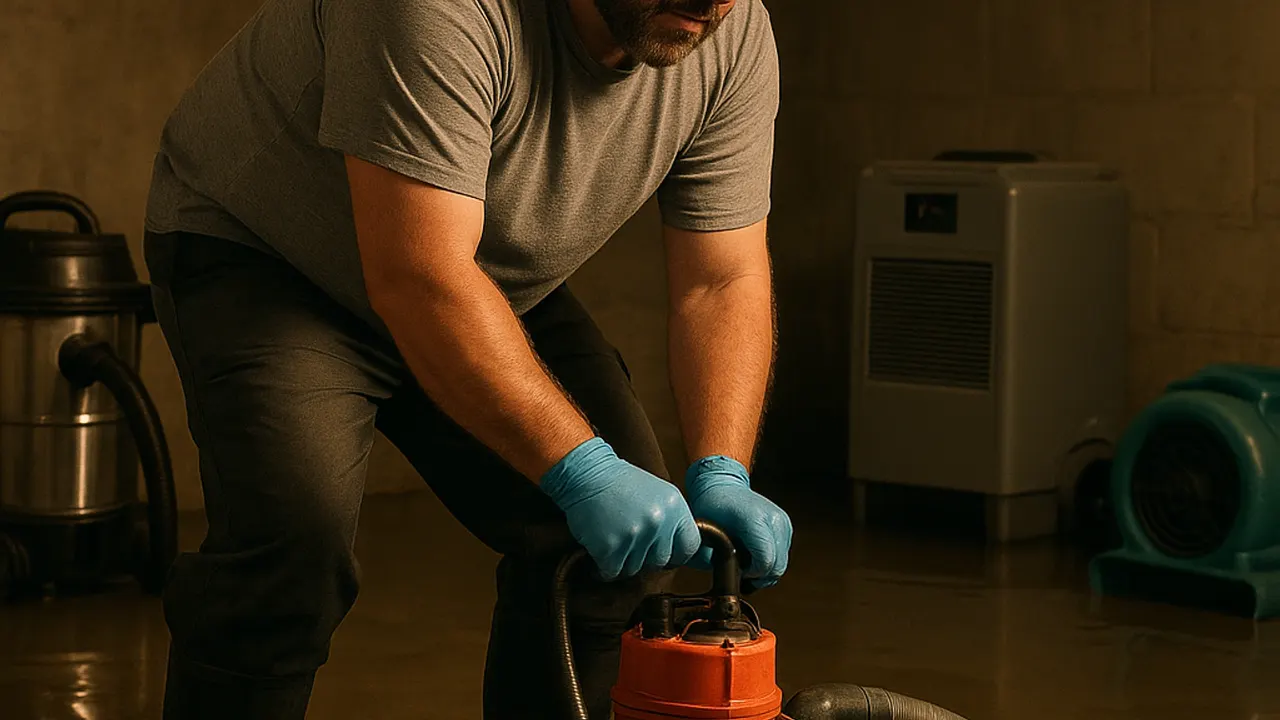
Standing water extraction
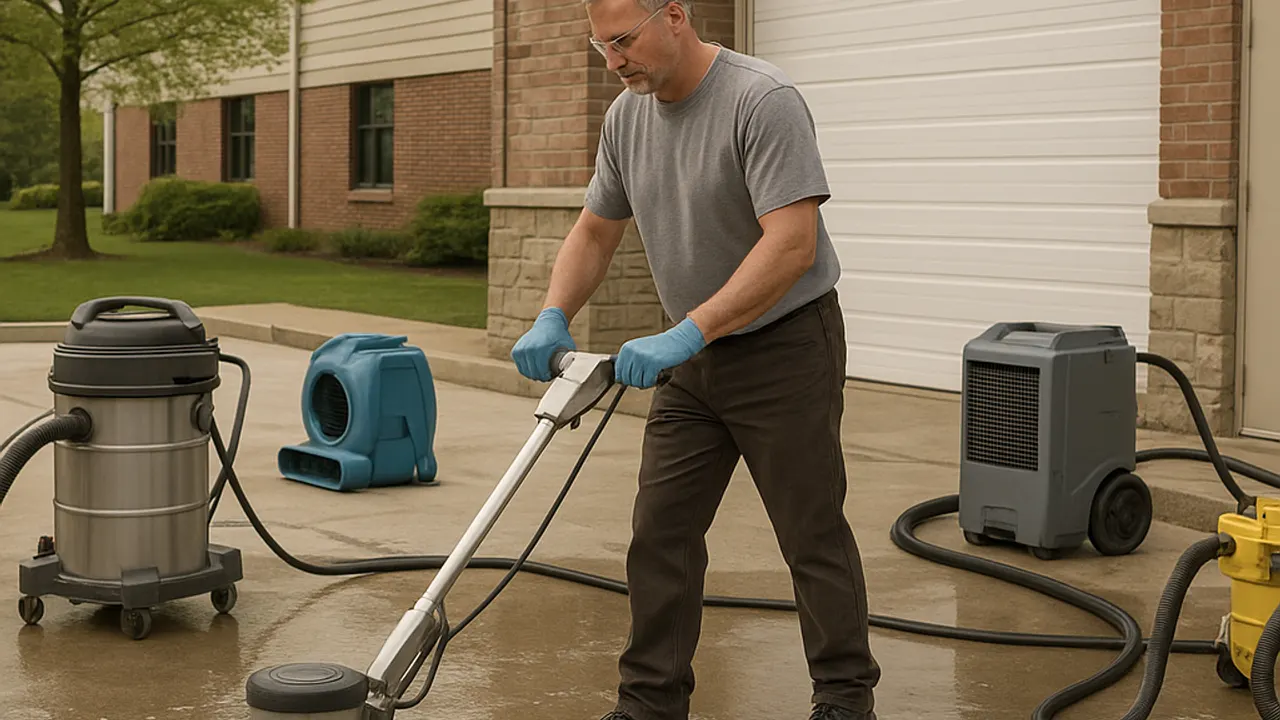
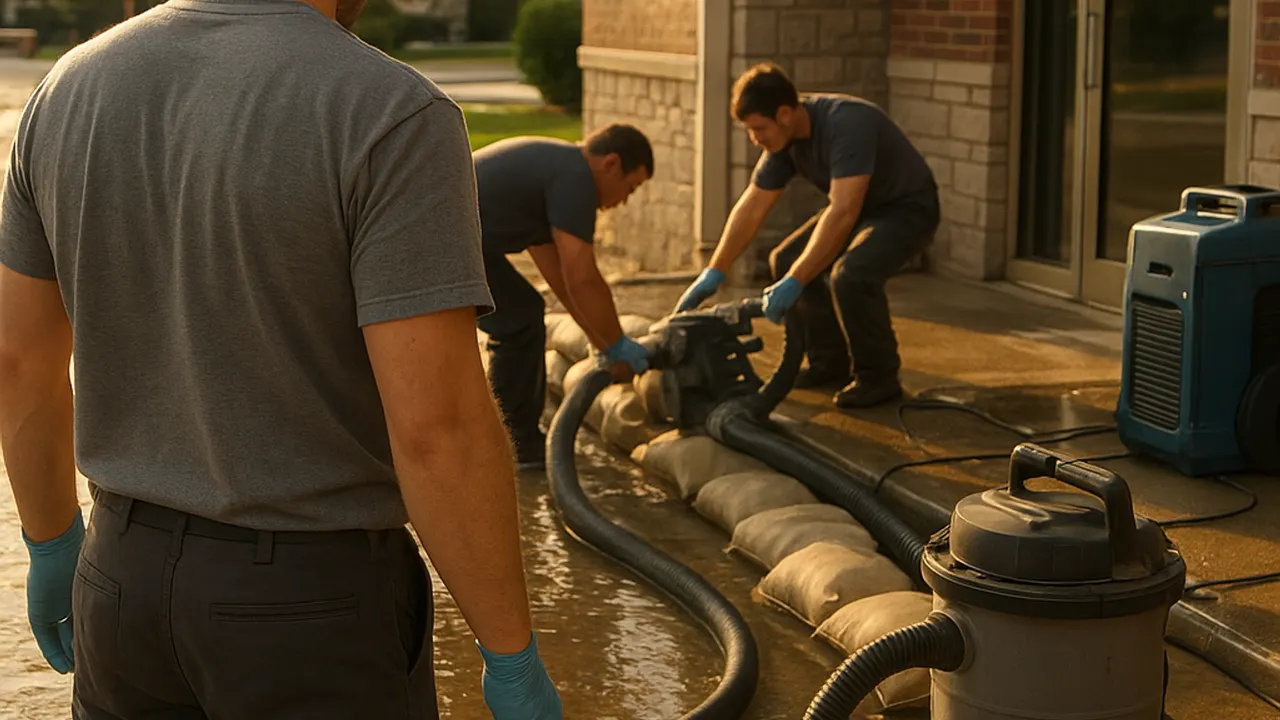
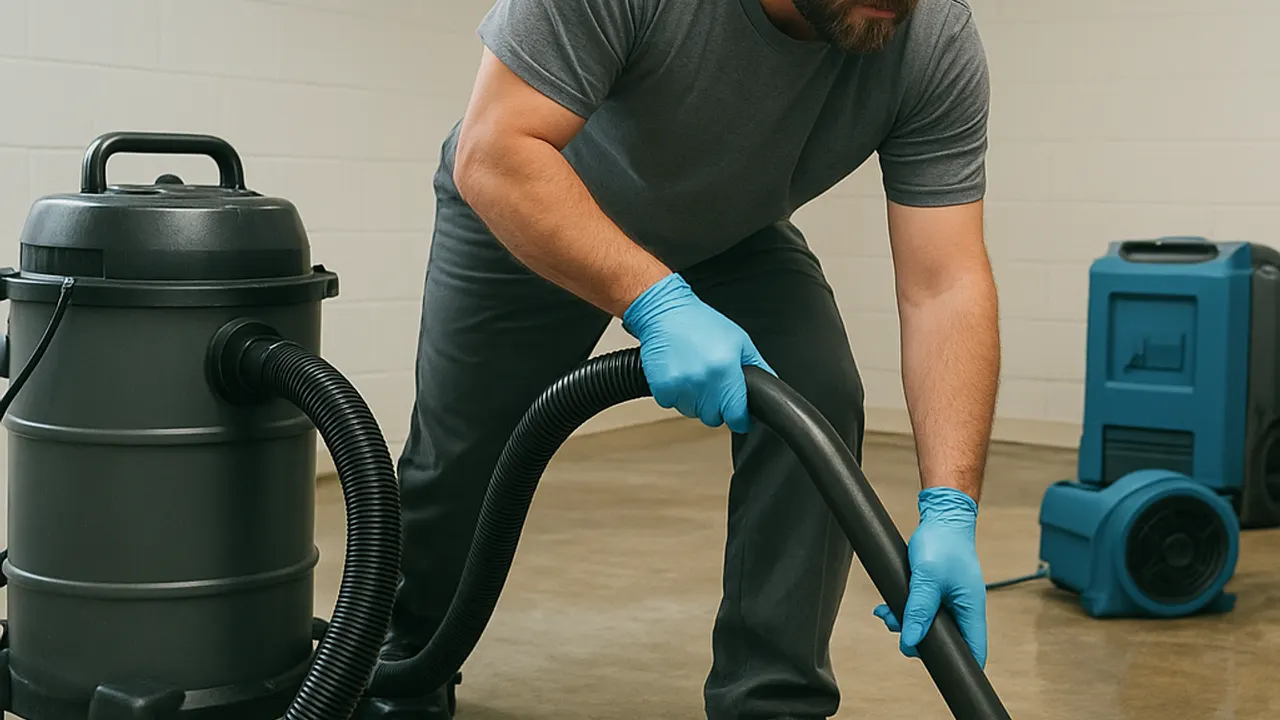
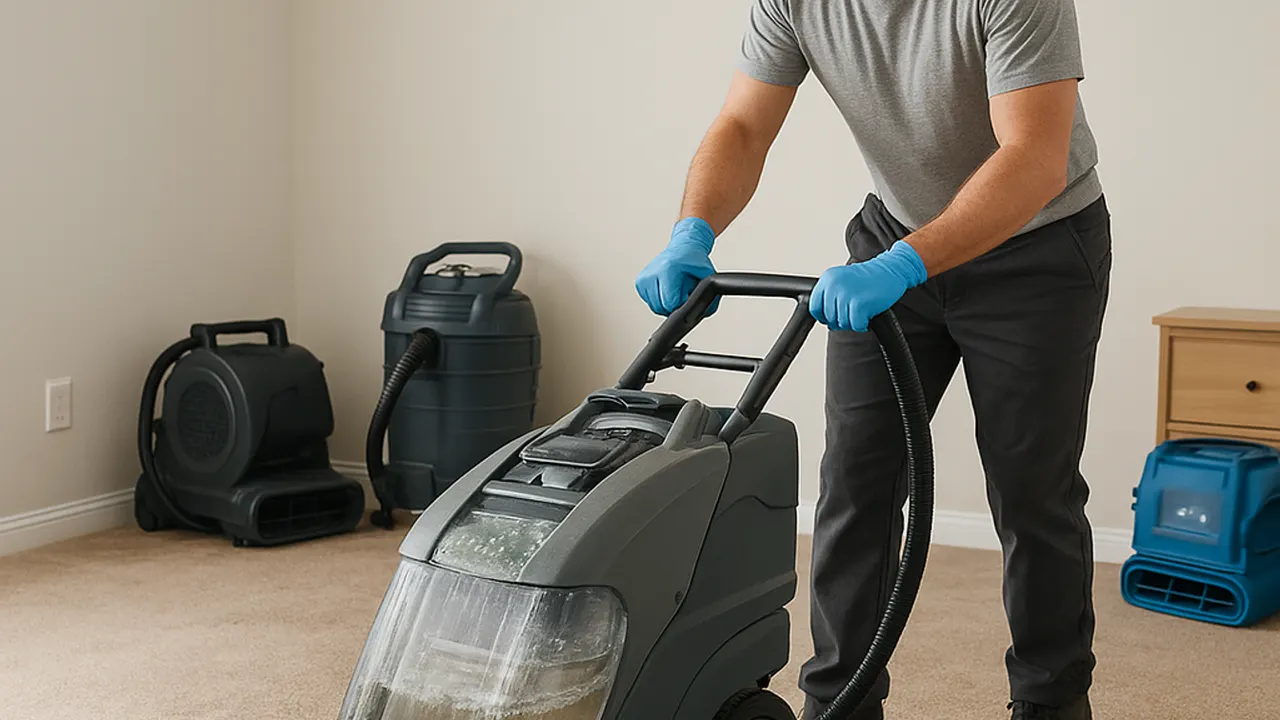
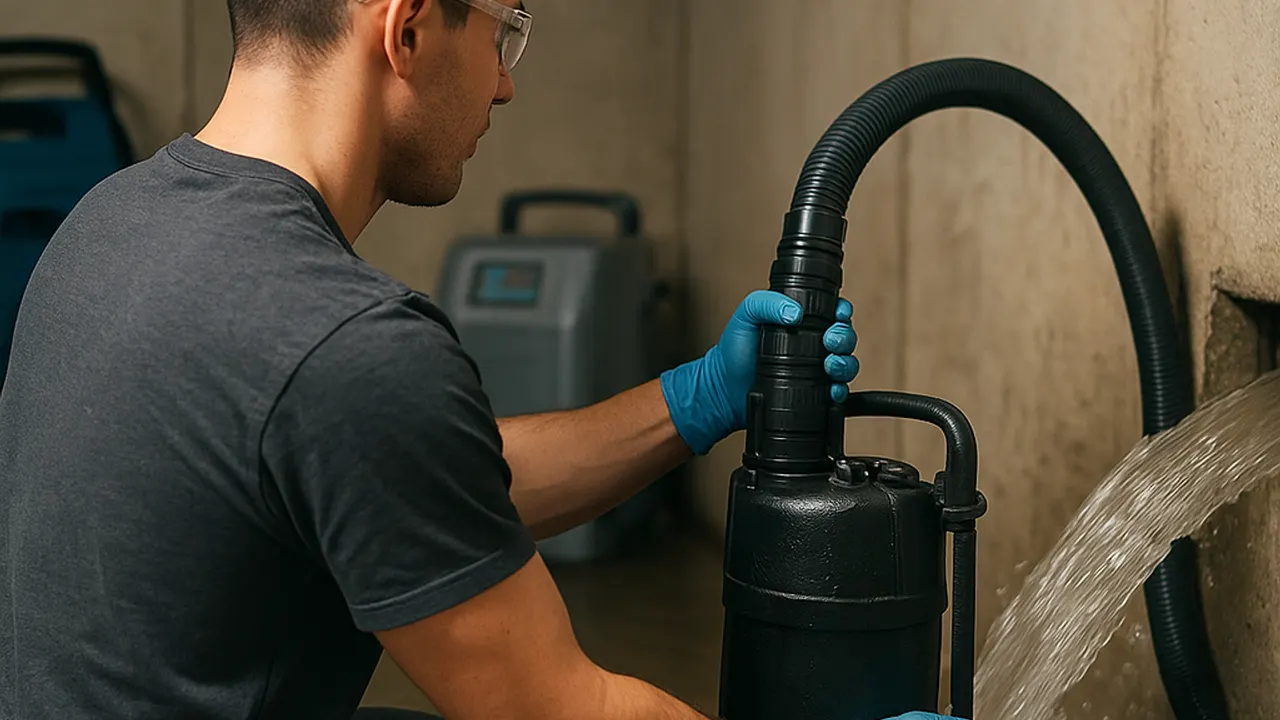
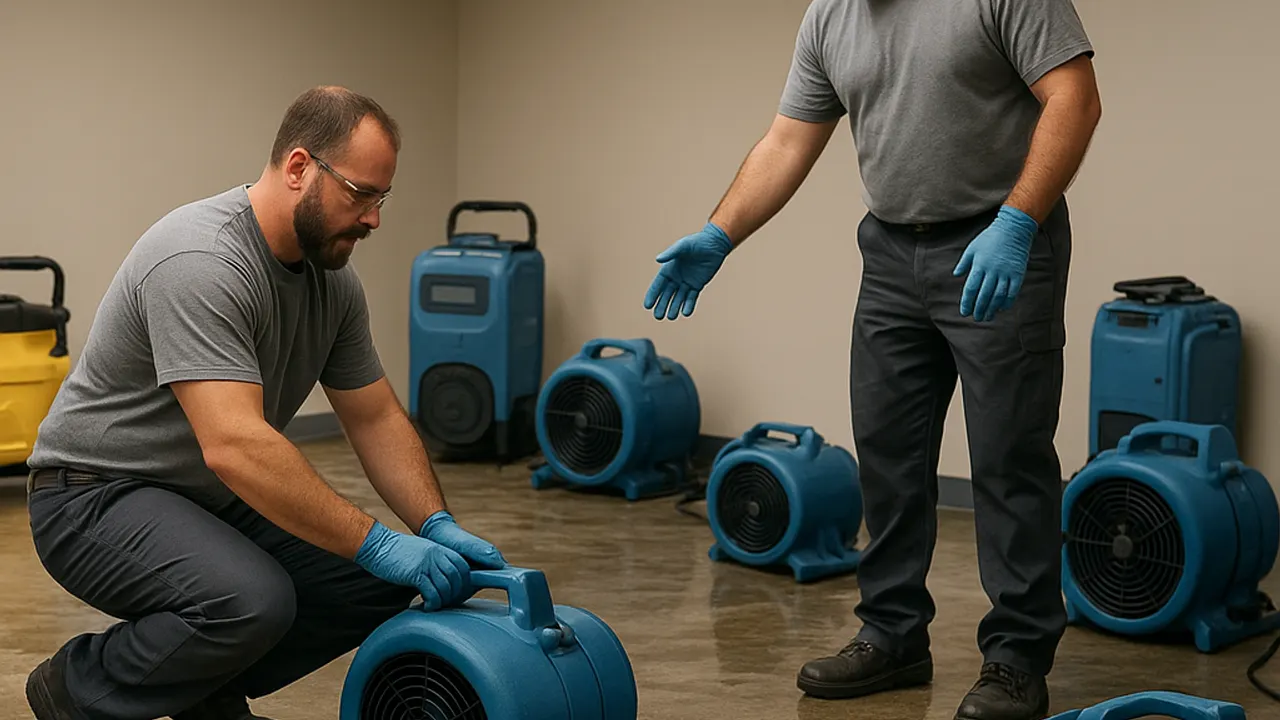
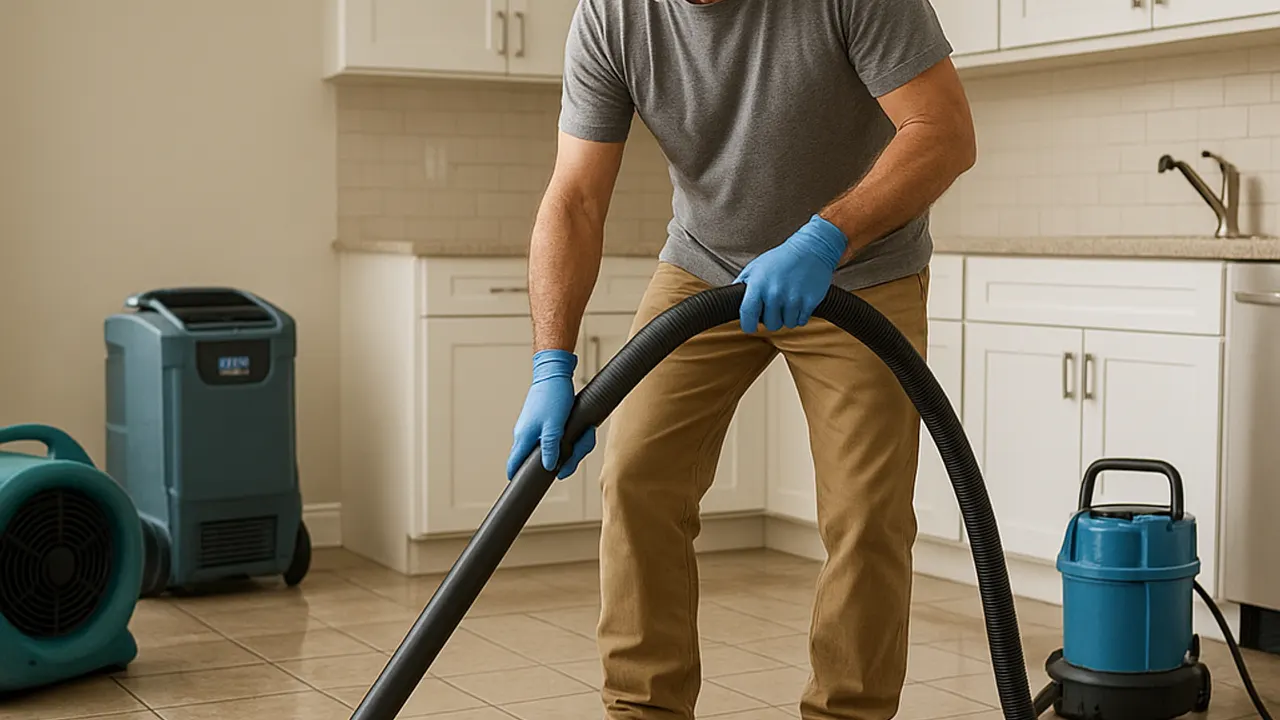
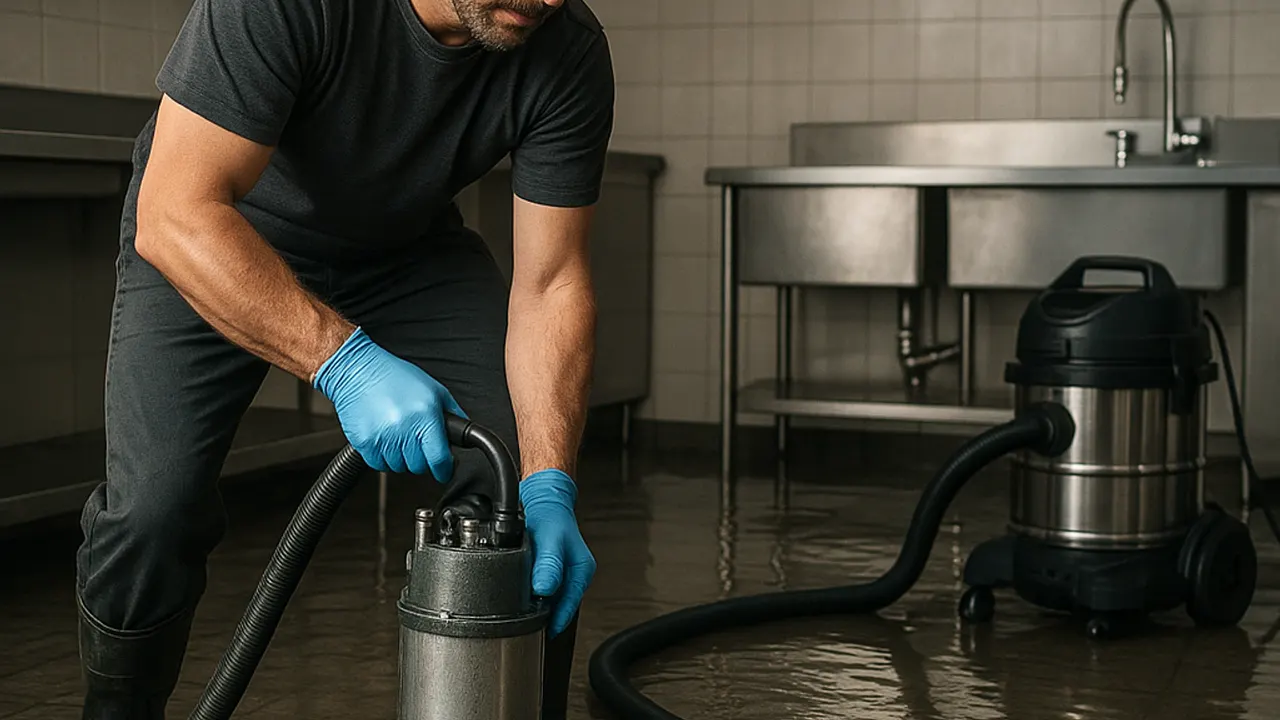
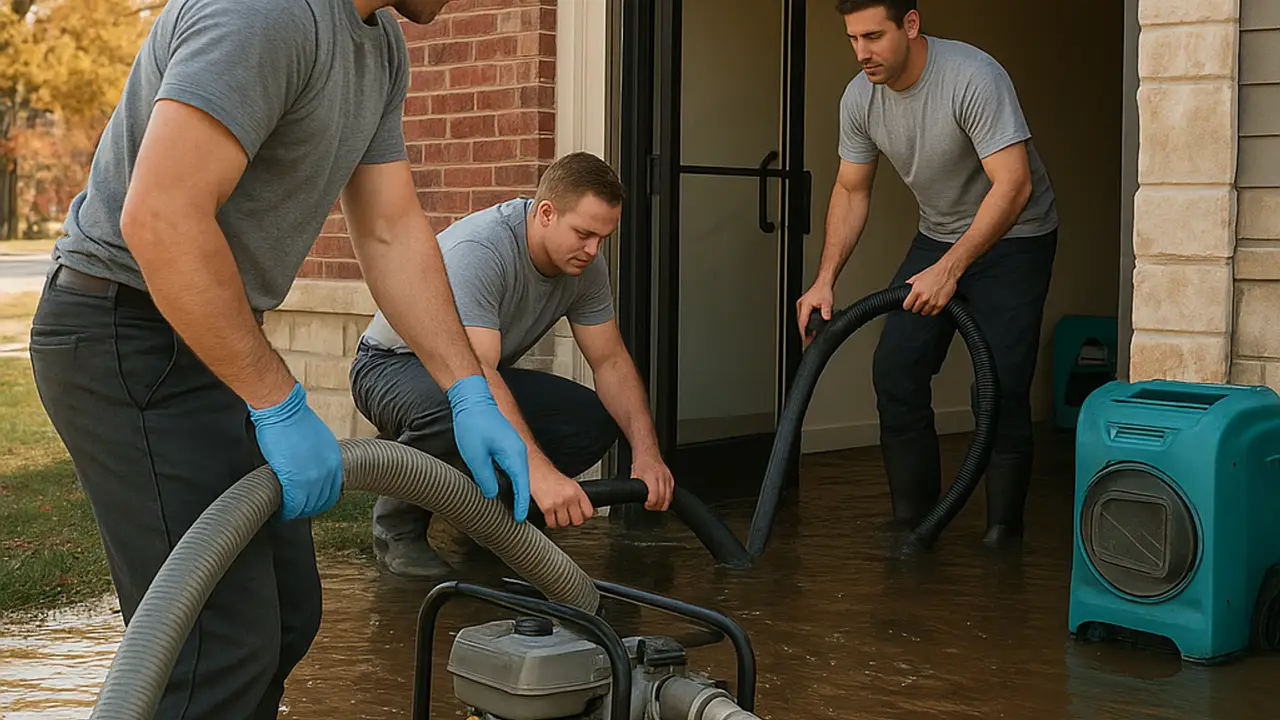
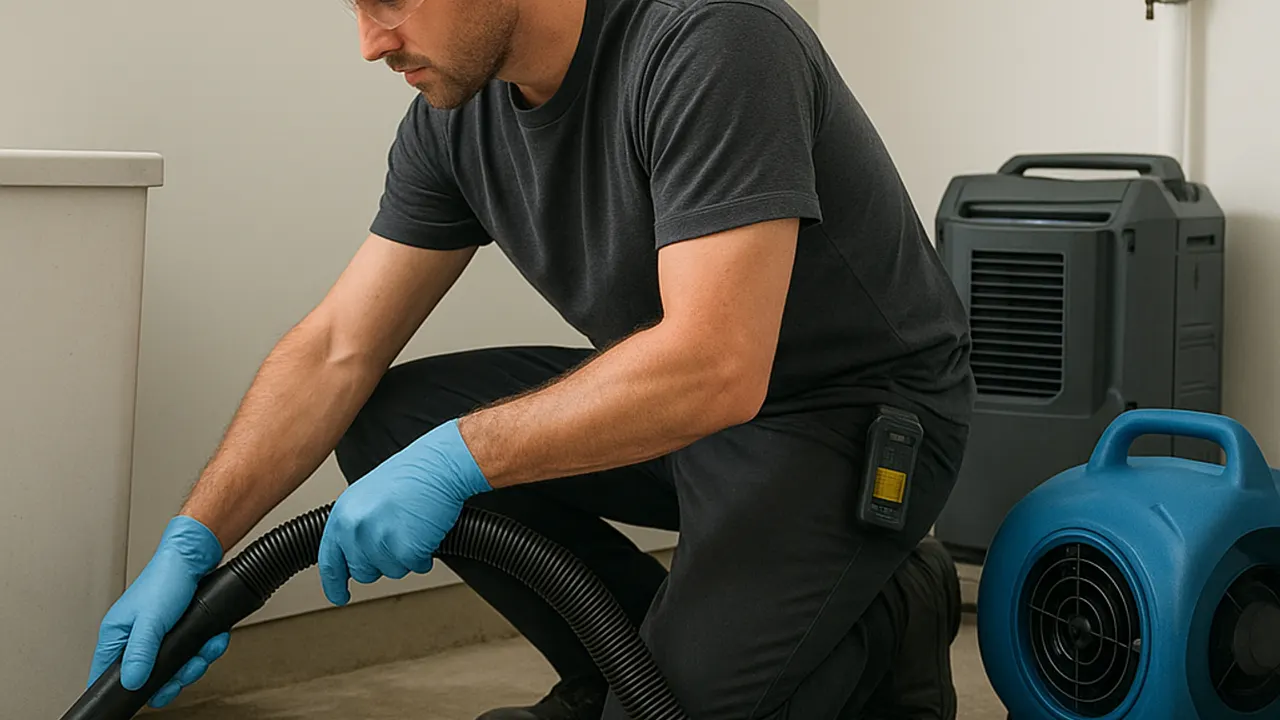
We remove accessible water with a submersible pump, extraction unit, or wet/dry vacuum suited to the space. The goal is to lower the water load before drying begins. Equipment choice depends on depth, access, flooring, and the amount of water present.
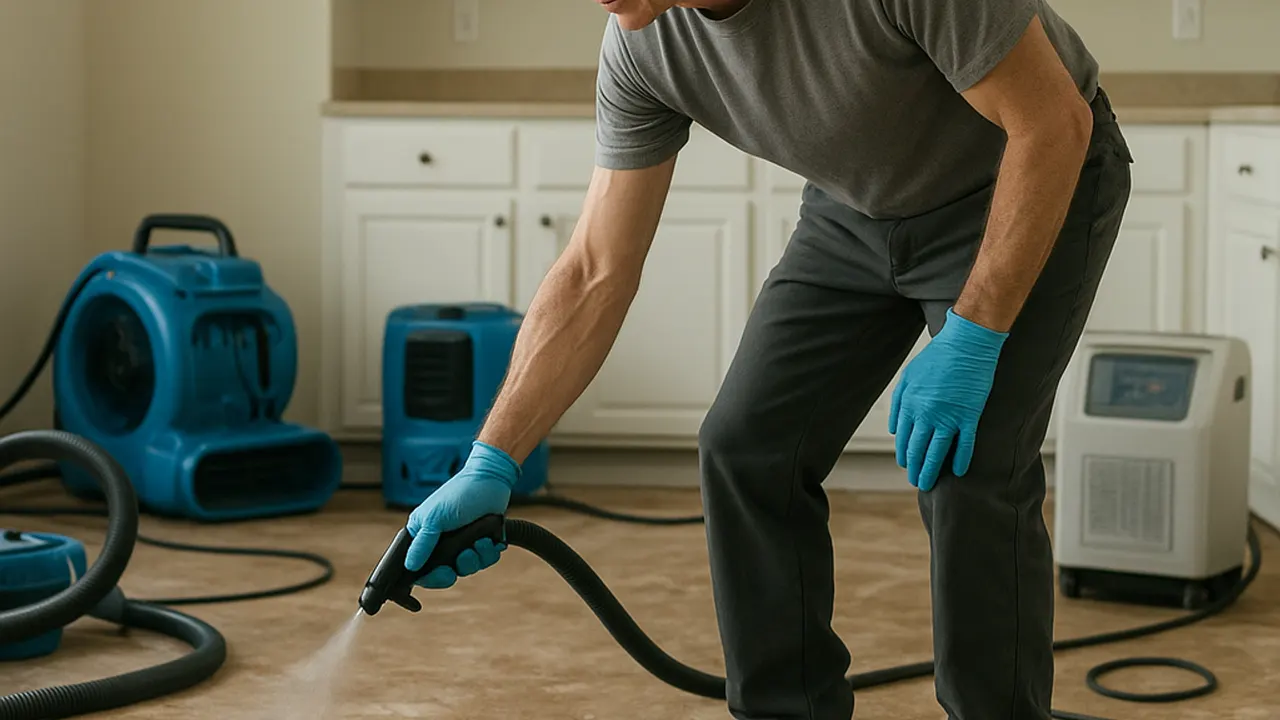
Surface cleaning
We clean affected hard surfaces with a suitable disinfectant when conditions call for it. The water source matters: a clean supply-line leak is different from water that contacted soil or drains. We explain how that distinction affects surface handling and material decisions.
Drying equipment setup
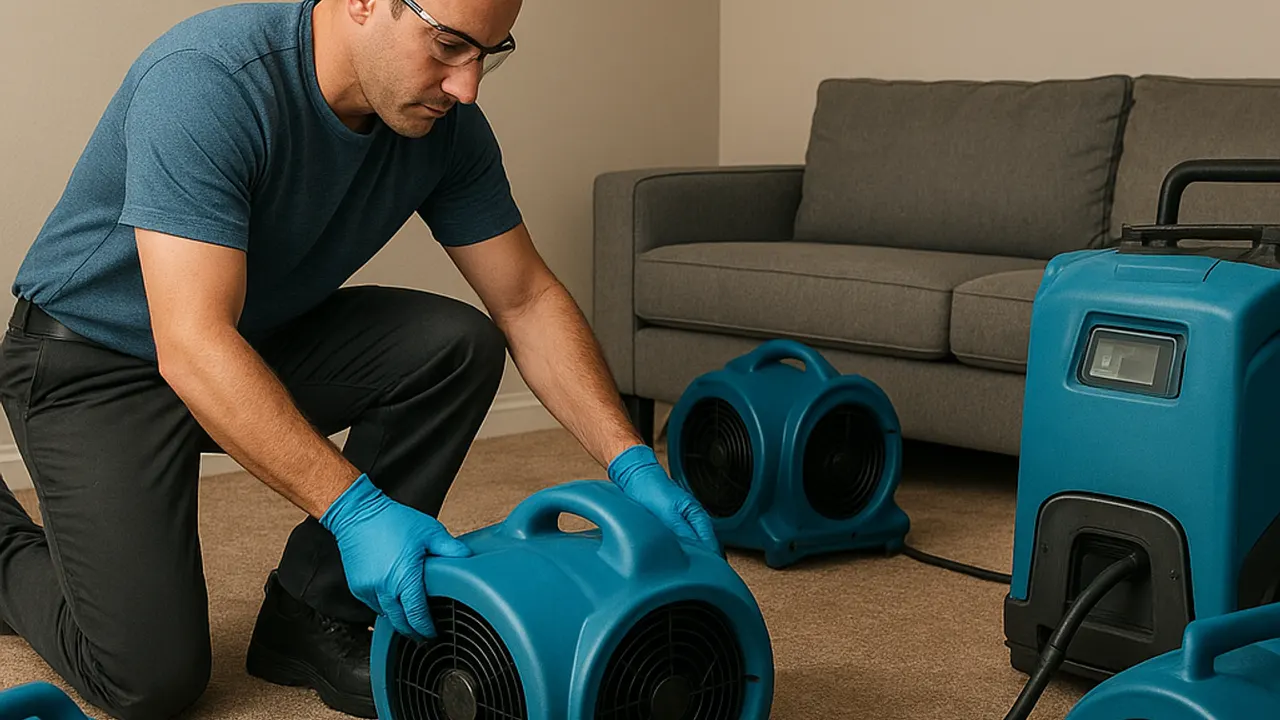
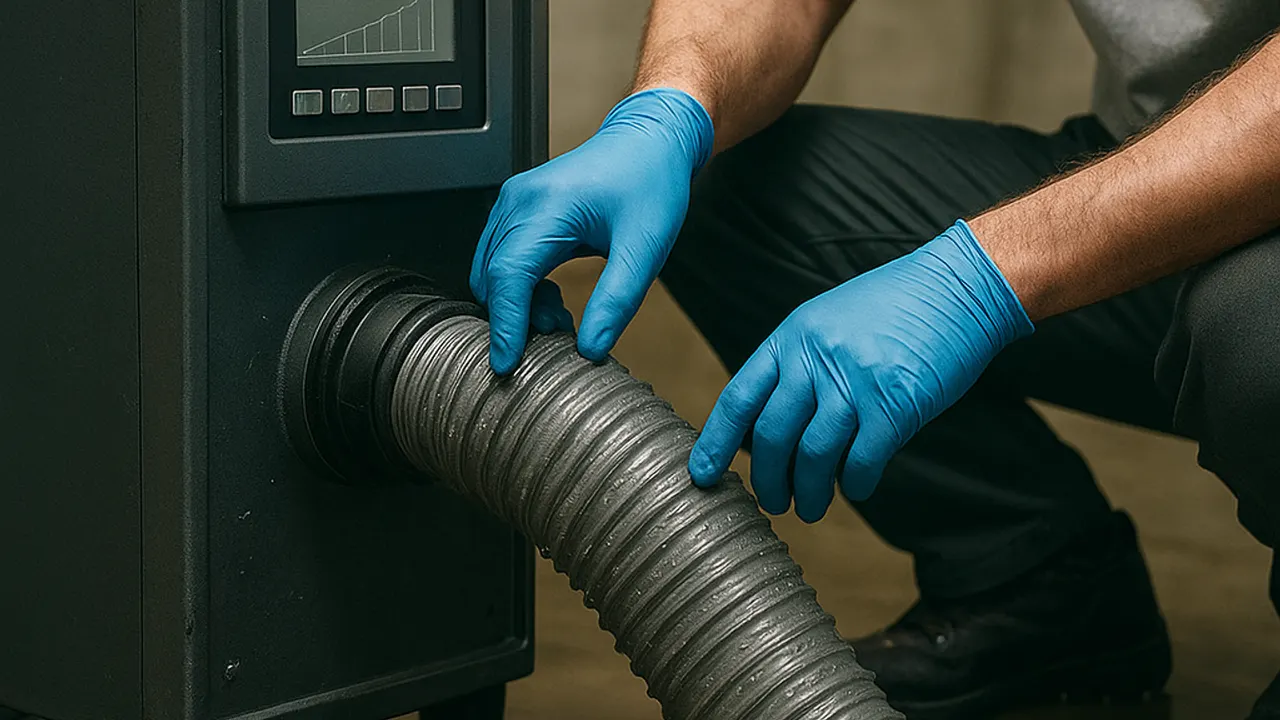
Air movers and a commercial dehumidifier help move moisture from the room and building materials. We position equipment to support airflow without blocking essential access. Follow-up measurements guide adjustments and show whether drying is progressing.
Material recommendations
We assess water-damaged carpet, padding, drywall, and other affected finishes for cleaning, drying, or removal. Porous materials exposed to contaminated water require careful handling. We explain the reason for each recommendation so you can plan the next phase.
Water damage cleanup Indianapolis IN explained
A plain-language look at what Water Damage Cleanup involves and when it is needed.
Water damage cleanup Indianapolis IN is a building cleanup service that removes unwanted water, cleans affected surfaces, and supports drying after a leak or flood. We start by locating visible water and checking how far moisture has moved into flooring, drywall, baseboards, and other materials. A submersible pump or truck-mounted water extraction unit handles deeper water; a wet/dry vacuum collects smaller amounts. Moisture readings help us decide what needs drying, cleaning, or removal, rather than relying on surface appearance alone.
Indianapolis homes and businesses face basement flooding, burst pipe water damage, sump pump failure, and stormwater intrusion. A finished basement can hide wet insulation or moisture behind walls even after the floor looks dry. For emergency water damage cleanup Indianapolis IN, we first address active water and electrical or access hazards, then work through extraction and drying. Our Indianapolis water damage cleanup service serves Marion County properties and adapts the plan to the water source and affected materials.
What to expect during cleanup
Water damage cleanup Indianapolis IN follows a practical sequence: understand the source, remove water, assess materials, and monitor drying. We explain each step in plain language, protect the work area, and keep you informed about what we find. The exact duration depends on how much water entered and which materials absorbed it.
Assess the area
We walk through the affected rooms with you, ask when the water began, and identify the source if it is known. We look for standing water, saturated flooring, and signs of water moving into walls or adjoining rooms. The initial assessment often takes 30 to 60 minutes, depending on access and the number of affected areas. You get an explanation of the immediate priorities.
Stop active water
Before extraction, we confirm that the leak or incoming water has stopped or is being controlled. You may need a plumber for a broken supply line, while our cleanup work addresses the water already inside. We note electrical hazards and avoid unsafe areas. This step prevents equipment from chasing a continuing leak and clarifies what must happen first.
Extract standing water
We remove pooled water with equipment suited to the space and depth, then collect remaining water from accessible surfaces. In a flooded basement, a submersible pump may remove bulk water before a portable extraction unit handles edges and flooring. Extraction time ranges from about one hour for a small room to several hours for extensive flooding.
Clean and set drying
We clean affected hard surfaces with an appropriate disinfectant when the water source and material call for it. Then we place air movers and dehumidification equipment to move moisture out of the room and building materials. Wet carpet padding, drywall, or insulation receives an individual assessment. You will know which materials are being dried and which need removal.
Check progress
We return or perform scheduled checks to measure moisture and adjust equipment placement. Drying commonly takes two to five days, but dense materials and cool, damp conditions can extend that window. We explain readings, document changes, and identify any remaining work. You receive practical instructions for access and equipment operation while the drying phase continues.
Equipment and drying methods
Move across a circle, or focus it and press Enter, for an illustrative thermal view of the photograph.
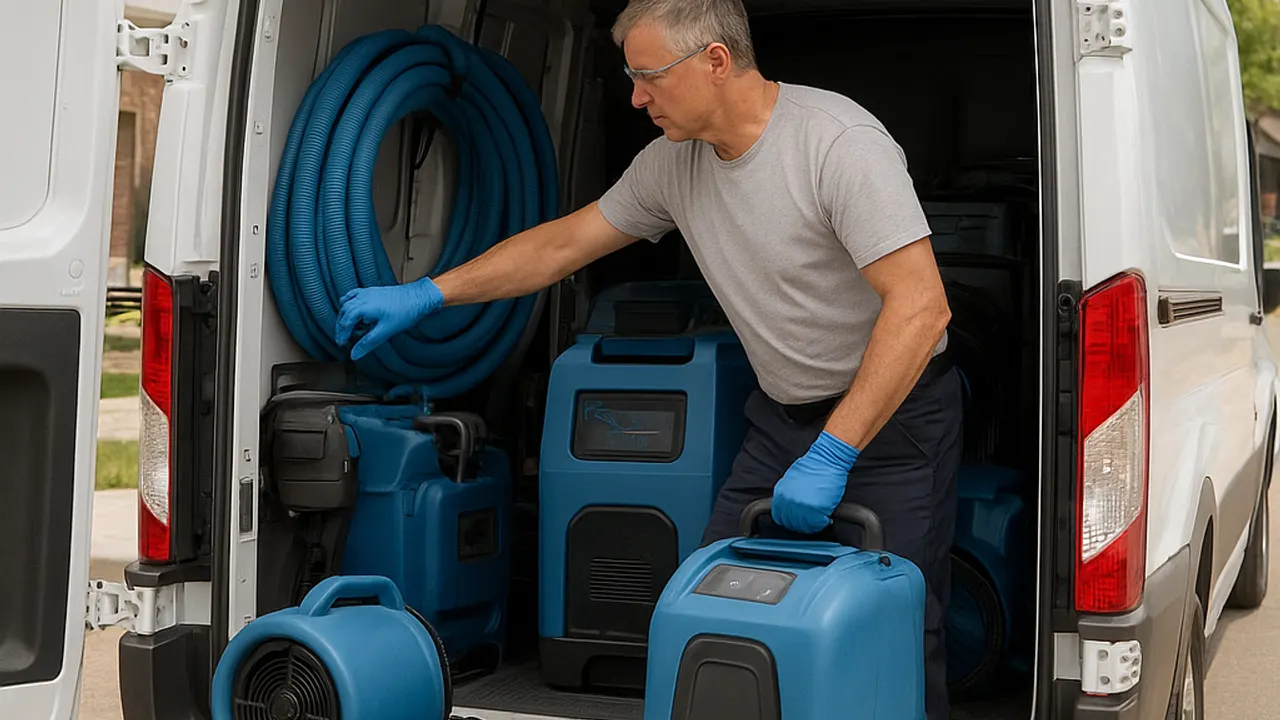
Truck-mounted water extraction unit
Removes substantial water from accessible floors and broad areas, reducing the amount left for drying equipment to handle.
Submersible pump
Moves deeper pooled water from basements and other low areas before detailed extraction and surface cleanup.
Moisture meter
Checks moisture in accessible building materials and helps compare affected areas with drier reference points.
Air mover
Directs airflow across wet surfaces to support evaporation after standing water has been extracted.
Commercial dehumidifier
Collects moisture from room air during structural drying and supports a controlled drying setup.
Thermal views are illustrative, generated from the photographs.
Methods
HEPA air scrubber
Filters airborne particles during appropriate cleanup tasks, especially when work disturbs dusty materials.
ANSI/IICRC S500-informed restoration
We use the ANSI/IICRC S500 Standard for Professional Water Damage Restoration as a reference for organized water-damage work. The practical sequence includes assessment, extraction, cleaning decisions, and drying checks. We still tailor the plan to the source, affected materials, and conditions inside your property.
Source and material assessment
We distinguish water from a clean plumbing supply from water that may have contacted soil or drains. That distinction affects protective measures, cleaning choices, and whether porous materials can remain. We also consider how long materials were wet and whether the water reached concealed spaces.
Measured drying checks
We check affected materials during drying and adjust equipment placement based on readings and airflow needs. A surface that feels dry does not confirm the floor assembly or wall cavity has dried. Progress checks help us explain remaining work and avoid relying on appearance alone.
Controlled material handling
We separate materials that can be cleaned and dried from those that are too saturated, damaged, or unsuitable to retain. Removal is handled with attention to access and adjacent finishes.
When cleanup is needed
A frozen supply line breaks overnight in a Meridian-Kessler home and water reaches the hallway.
Once the water is shut off, we inspect the hallway and adjoining rooms, remove standing water, and check baseboards and flooring. If moisture has moved into wall cavities, we explain the appropriate next step. We set up drying equipment according to the affected materials and monitor progress.
Outcome: You get water removed from the visible floor and a clearer view of concealed wet areas before repairs begin.
Heavy autumn rain overwhelms a sump pump in a finished basement near Eagle Creek.
We pump pooled water and assess carpet, padding, lower drywall, and stored items. After extraction, we clean suitable surfaces and position drying equipment. We also distinguish immediate cleanup from pump repair and any work needed to prevent another entry.
Outcome: The basement moves from pooled water to a measured drying plan, with affected materials identified for cleaning or removal.
A water heater leaks in a Fountain Square property while the owner is away for several hours.
We remove water from the utility area and adjacent flooring, inspect nearby baseboards, and determine whether the leak reached a wall or closet. The water heater repair is handled separately; our cleanup focuses on extraction and drying the affected building materials.
Outcome: You know which surfaces were affected and what must dry before replacement flooring or trim work proceeds.
A commercial suite in Downtown Indianapolis discovers water below a ceiling leak after a storm.
We inspect the visible floor area and nearby wall surfaces, extract pooled water, and check the ceiling and adjoining rooms for spread. We coordinate access around business operations and explain what requires drying or additional building repair.
Outcome: The property manager receives a defined affected area and practical next steps for cleanup, access, and follow-up.
Broad RippleFountain SquareIrvington
How cleanup works across Indianapolis
Water damage cleanup Indianapolis IN has to account for local housing styles, seasonal rain, freezing conditions, and the way water moves through basements and older floor assemblies. Autumn storms can push rainwater into low entries; winter freezes can split supply lines, while spring rainfall can expose sump pump problems.
In older homes around Irvington and Meridian-Kessler, hardwood flooring, plaster, and layered finishes can complicate drying. Newer properties with finished basements may conceal wet insulation behind drywall. Our water-damaged home cleaning Indianapolis work starts with the source and a room-by-room check, then uses extraction and moisture readings to guide the drying plan.
For how quickly should water damage cleanup start in Indianapolis, the practical answer is as soon as the water source is controlled and it is safe to enter. We serve Marion County, including properties in ZIP codes 46219 and 46217, and work around access needs in occupied homes and businesses.
Broad Ripple: Older and renovated homes can combine hardwood, carpet, and finished lower levels, so we check transitions where water can travel beneath trim.
Fountain Square: Mixed building ages and compact floor plans make it useful to inspect adjoining rooms, not just the visible wet spot.
Irvington: Older finishes and wood floors need material-specific assessment before drying or removal decisions are made.
Downtown Indianapolis: Apartments and commercial suites often need coordinated room access and a clear separation between cleanup and building repairs.
Autumn rain entering low basement openings: Water can cross a threshold and spread along finished flooring before it is noticed. We trace the visible path, remove pooled water, and check neighboring rooms and lower wall materials.
Winter freeze followed by a pipe break: A split line can release water into walls and floors while the property is closed or asleep. We address extraction after the source is shut off and check beyond the immediate break for migration.
IllustrativeThe thermal view is generated from the photograph. It is not a measurement. Drag the handle, or use the arrow keys once it is focused.
Basement after a sump failure
Before: A failed sump pump left about two inches of water across a finished basement. Carpet and padding were saturated near the stairwell, and stored boxes blocked parts of the floor. The homeowner could not tell whether water had reached the lower drywall or only the carpet surface.
After: We pumped out the pooled water, extracted the accessible carpet, and checked the lower wall and floor areas. Moisture readings identified sections that needed continued drying, and the affected padding was assessed for removal. The homeowner received a clear account of what remained wet and why.
Keep stored items raised off basement floors and test the sump system on its manufacturer-recommended schedule. After heavy rain, check the floor and pump operation before moisture spreads.
Kitchen leak across connected flooring
Before: A leaking supply line left water beneath the kitchen cabinet and across the threshold into a nearby room. The visible floor had been wiped, but the baseboard felt damp and the adjoining carpet edge showed signs of moisture.
After: We extracted water from accessible flooring, checked the cabinet edge and baseboard, and assessed the carpet transition. Drying equipment supported airflow in the affected area. Follow-up checks helped determine which materials could remain and which required further attention.
Inspect under-sink connections periodically and close the local shutoff if a leak appears. Keep the cabinet base clear enough to spot drips before they travel into adjoining rooms.
Rainwater in a commercial suite
Before: Stormwater entered a ground-level suite and collected along one wall before staff arrived. Water crossed a flooring seam and reached several desks, leaving the manager unsure how far cleanup needed to extend.
After: We removed the visible water, checked the adjoining floor area, and identified the boundary of affected materials. The manager received practical access guidance while drying equipment ran. The remaining repair needs were separated from extraction and surface cleanup.
Check exterior entry points after heavy rainfall and move stored items away from vulnerable floor edges. Report recurring water entry so the opening can be repaired rather than repeatedly cleaned.
Problems addressed by prompt water cleanup
Water left in a building keeps moving into porous finishes and concealed spaces. For water damage cleaning near me Indianapolis searches, the important first steps are controlling the source, extracting water, and checking what remains damp. We tackle visible damage while looking for connected wet areas that could cause additional trouble.
Basement water spreading across carpet and stored belongingsWater can soak carpet padding and travel beneath flooring, while stored items block airflow and complicate extraction. Delayed drying raises the chance of lingering odors. We remove pooled water, move or work around affected contents as access allows, and check carpet and lower walls. We assess whether carpet padding can be dried or should be removed. Drying equipment is positioned to improve air movement, and follow-up readings help identify areas that still need attention.
Burst pipe soaking drywall before the leak is noticedWater can move behind baseboards and into wall cavities, leaving surfaces that look dry while insulation remains wet. Continued moisture can damage finishes and support secondary mold growth. After the pipe is shut off, we extract water from accessible flooring and inspect the affected wall area. We use moisture checks and explain whether localized opening or material removal is needed. We do not treat a dry-looking wall as proof that the cavity is dry.
Sump pump failure leaving standing water downstairsStanding water can spread through a basement, wet stored materials, and saturate floor coverings. The longer it remains, the more work may be needed to clean and dry affected surfaces. We pump out accumulated water, identify the limits of the wet area, and check flooring and lower wall materials. We then set drying equipment where appropriate and distinguish cleanup from repair or replacement of the failed pump. You get a clear account of remaining moisture concerns.
Rainwater intrusion affecting several connected roomsWater entering through a low opening can cross thresholds and reach multiple floor types. Hidden moisture may remain under flooring or behind trim after the visible water is gone. We trace the visible path, extract water from each affected area, and check adjoining rooms rather than stopping at the entry point. The source needs to be sealed separately if rain is still entering. We explain which surfaces need cleaning, drying, or further inspection.
Cleaner, drier spaces with less disruption
Water damage cleanup is about more than removing a puddle. We work to limit spread, identify wet materials, and leave you with clear next steps. The right extraction and drying approach helps protect floors and wall assemblies from avoidable damage.
Water removed at source
We match extraction to the amount and depth of water, using pumps for deeper accumulation and portable equipment for tighter spaces. This matters after a water heater leak or basement flooding, when standing water can spread into carpet padding and lower drywall. You see what is wet and what we are removing, not just a quick surface pass.
Moisture checked beyond sight
A moisture meter helps us compare affected areas with dry reference points, while thermal imaging can flag temperature patterns that merit closer inspection. These checks help identify hidden moisture behind walls and beneath flooring. Water damage cleaning Indianapolis should address concealed wet areas as well as visible marks, so we explain what the readings indicate before proceeding.
Materials handled by condition
Water-damaged carpet, padding, hardwood flooring, and drywall do not all respond the same way. We assess the material, water exposure, and drying potential before cleaning or removal. If a material is too saturated or contaminated to retain, we explain why. That reduces guesswork and helps you prioritize the work that protects the building.
Drying steps made visible
We position air movers and a commercial dehumidifier to support drying, then check progress rather than assuming the room is ready. You get practical guidance on access, belongings, and follow-up measurements. After a leak, this method helps reduce the chance that damp building materials remain unnoticed and contribute to secondary mold growth.
Field knowledge for wet buildings
Our work focuses on the decisions that make cleanup effective: identifying the water source, choosing extraction equipment, and checking materials as they dry. We use established restoration practices and refer to the ANSI/IICRC S500 Standard for Professional Water Damage Restoration when planning water-damage work.
Moisture checks distinguish a damp surface from water held inside drywall, flooring, or framing.
Extraction equipment is selected for water depth, access, floor type, and the area affected.
We identify conditions that call for additional microbial assessment before disturbing materials.
Service ZIP codes.
A list like this tells people straight away whether you cover their street. Not listed? Call and ask: it only takes a minute.
Water Pump Masters provides water damage cleanup in Indianapolis for homes and businesses affected by leaks, flooding, and standing water. We assess the source and affected materials, extract water, and set up drying where appropriate. For emergency water damage cleanup Indianapolis IN, call 3177928700 and describe the water source, affected rooms, and whether water is still entering. Those details help us understand the immediate work needed.
Professional flood cleanup includes an initial assessment, water extraction, cleaning of affected surfaces, and drying checks based on the water source and materials. Flood cleanup Indianapolis IN may also involve removing unsalvageable carpet padding or wet drywall. We explain what we find and what the next step involves. Repairing the leak, rebuilding walls, and replacing finishes are separate work unless specifically arranged.
Typical 2026 pricing depends on water volume, room count, contamination, access, and how much material needs removal. We assess the affected area and explain the cost before work proceeds. A small appliance leak costs less than a multi-room basement flood requiring pumping, disposal, and several days of drying.
Yes, water damage cleanup can reduce odors by removing the water source, cleaning affected surfaces, and drying or removing damp materials. Odors often remain when carpet padding, insulation, or other porous materials stay wet. We check affected areas and explain which items can be cleaned and dried. If contamination or persistent odor points to a larger issue, we identify the next appropriate assessment rather than masking the smell.
Tell us what happened, where the water is, and whether it is still entering. Water Pump Masters will discuss the cleanup steps and what information helps us assess the affected area. Call 3177928700 to speak with our team about your Indianapolis property.
Call 317-792-8700 to describe a leak, flooded basement, or water-soaked floor and get connected with an independent service company. Share your Indianapolis neighborhood, the water source, and whether the water is still spreading. Hours vary by company, so call to discuss urgent needs and the next practical step.